
Treatments for Problems in Snoring, Sleep, and Breathing in Joondalup
Looking at treatments for problems in snoring, sleep, and breathing in Joondalup? Learn how dental evaluation may assist in assessing airway health and breathing function during sleep.
How Dentistry May Play a
Supportive Role

Snoring, sleep disruption, and irregular breathing during rest can sometimes be linked to how the jaw, tongue, and surrounding oral structures are positioned. These features may reduce airway space or alter airflow, particularly when lying down.
A dental assessment for snoring and sleep concerns can help identify how oral posture, jaw alignment, or bite patterns may influence airway function. This forms part of a broader, collaborative approach to identifying contributing factors in sleep and breathing issues.
Why Choose Crown Holistic Dental for Holistic Dentistry
Your mouth is part of a bigger picture—your overall health. Here’s why patients choose our holistic approach that nurtures both a beautiful smile and general well-being.
 Whole-Person Perspective in Dental Care
Whole-Person Perspective in Dental Care Our recommendations consider functional and comfort-related factors that may influence everyday life, while focusing on maintaining a healthy smile. This approach helps patients receive care that supports them in maintaining oral health, which is an important part of general well-being.
 Biocompatible Materials for Patient Care
Biocompatible Materials for Patient Care We offer a range of commonly used dental materials, including BPA-free composites. These materials are selected with patient comfort and compatibility in mind, and may help reduce the likelihood of irritation or sensitivity. Options are explained and discussed so patients can make informed choices tailored to their individual needs and preferences.
 Collaborative Care When Appropriate
Collaborative Care When Appropriate Where beneficial, we coordinate with other health professionals, such as myofunctional therapists or paediatricians, to support a more comprehensive approach. This collaboration is designed to address relevant contributing factors to oral health, provide care that considers their individual needs and provide integrated, professional dental care.
 Prevention as a Priority
Prevention as a Priority We focus on prevention as the foundation of good dental care. Through early detection, personalised treatment plans and patient education, we aim to support the maintenance of oral health. This proactive approach may help reduce the likelihood of needing more complex treatments over time.

Who May Benefit From Airway-Focused Support
- Airway-focused dental care looks at how the mouth, jaw, and airway may affect breathing—especially during sleep. It may support individuals with signs of airway-related concerns. People who may benefit from this approach include:
- Those who snore regularly or breathe through the mouth at night
- Children with crowded teeth or narrow arches
- Individuals waking unrefreshed despite adequate sleep
- People experiencing sleep disruption without a clear cause
Features of Our Holistic Airway-Focused Approach
- Holistic airway care goes beyond isolated symptoms, considering how the mouth, airway, and breathing patterns interact. Our approach focuses on the following:
- Emphasis on long-term function and wellbeing
- Gentle, individualised assessments tailored to each person
- Collaborative care with other health professionals when appropriate
- Consideration of how oral factors may influence sleep and breathing patterns over time

Start Your Airway Health Assessment Toward a Renewed Smile Now
If you’re experiencing persistent sleep issues or snoring, dental airway support in Joondalup may help explore how jaw development and oral posture contribute. We offer care that considers your airway as part of your overall well-being.
Your Sleep, Breathing, and Snoring Assessment
Step by Step
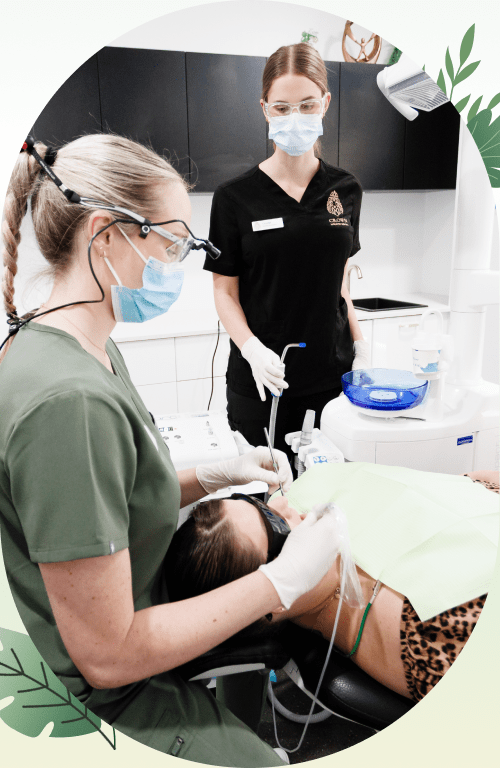
If you’re exploring treatments for problems in snoring, sleep, and breathing in Joondalup, a detailed dental assessment may be the first step. Here’s what you can expect from our airway-aware approach:

Understanding Your Concerns:
Your consultation may be the first step in a Joondalup-based dental airway support, helping connect your symptoms to possible oral or structural contributors. We’ll also ask about medical history, lifestyle habits, and past treatments to understand your situation better and guide the next steps in your care.

Airway and Oral Examination:
This airway-focused snoring and sleep dental assessment includes a detailed look at how your jaw, tongue, and breathing function together to support a stable airway during sleep. This step helps identify physical factors that may be contributing to airway challenges, snoring, or disrupted sleep during rest.

Screening and Collaborative Referrals:
If appropriate, we may use screening tools to evaluate risk factors for conditions such as sleep-disordered breathing. Where needed, we can refer or collaborate with GPs, ENTs, and other medical professionals to build a broader picture of your airway health and sleep quality.

Planning the Next Steps:
Once we’ve gathered enough information, we’ll discuss tailored options that may support your airway health. This could involve dental treatments, habit changes, myofunctional support, or further testing—all based on your needs, comfort, and long-term wellbeing goals.





Frequently Asked Questions
Learn more about treatments for problems in snoring, sleep, and breathing in Joondalup with these common questions answered by our dental team.
How can dentists help with snoring and sleep issues?
Dentists with a focus on airway health can play a significant role in identifying and managing factors that may contribute to snoring or disrupted sleep.
During a routine dental exam, dentists examine more than just teeth; they also look at how your jaw, tongue, and airway are functioning. This may include checking for signs, including the following:
- Narrow palate
- Worn teeth from grinding
- Poor tongue posture
- Mouth breathing
- Backward-positioned lower jaw
All of these may affect how well you breathe at night.
Our dentists may also ask about your sleep quality, daytime tiredness, and any history of snoring. Identifying these patterns early allows us to guide you towards further evaluation or supportive care.
What dental treatments support better breathing during sleep?
There is a range of procedures that may help improve breathing during sleep, depending on your needs. Some of the common options we offer include the following:
- Mandibular advancement splints: These are custom-fitted oral appliances that gently reposition the lower jaw forward. They help widen the airway and reduce soft tissue collapse to support the tongue during sleep. Mandibular advancement splints may be considered for snoring in appropriate cases. Diagnosis and treatment of sleep apnoea must be managed by a medical professional.
- Myofunctional therapy: This involves a series of tongue and facial exercises aimed at improving muscle tone, encouraging nasal breathing, and promoting healthy tongue posture. It’s suitable for children and adults and may be offered on its own or alongside other treatments.
- Airway-focused dental assessments: We take a whole-body approach by evaluating how oral posture, bite development, and breathing patterns are working together. This allows us to recommend personalised care and, if needed, refer you to other professionals for further investigation.
- Orthopaedic and orthodontic interventions: In developing children, expanding narrow dental arches or guiding jaw growth may reduce long-term airway limitations. Adults may also benefit from similar interventions where appropriate.
These procedures are part of a breathing-focused dental care plan, particularly when oral structures influence airflow during rest. We will work closely with you to choose the options that are most suitable for your lifestyle and sleep goals.
What is the link between jaw position and airway health?
Jaw position plays a significant role in how freely air moves through the upper airway, especially during sleep, when muscles relax.
A snoring and sleep dental assessment may reveal that a recessed lower jaw is reducing airway space, contributing to snoring or interrupted breathing. Some people may also experience clenching or grinding as the body unconsciously tries to stabilise the airway.
Some signs that jaw position may be affecting airway health include the following:
- Small or recessed lower jaw: A visibly small or recessed jaw reduces space behind the tongue, making breathing difficult when lying down.
- Narrow dental arches: Crowded teeth or narrow arches limit room in the mouth, potentially obstructing airflow through the upper airway.
- Mouth breathing: Breathing through the mouth at rest often indicates nasal blockage, resulting in less efficient oxygen intake.
- Morning headaches and dry mouth: Frequent headaches or a dry mouth upon waking may suggest disrupted sleep or overnight mouth breathing, both linked to airway obstruction.
We assess jaw alignment not just for bite function but also for its impact on breathing and sleep. When necessary, we may explore non-invasive treatments such as oral appliances or refer you for further airway evaluation.
How does tongue posture affect sleep and breathing?
Tongue posture, which is the natural resting position of the tongue, can influence how well you breathe, especially when you’re asleep.
Ideally, the tongue should rest gently against the roof of the mouth, with the lips closed and breathing through the nose. When the tongue sits low or falls back during sleep, it can partially block the airway, which may lead to the following conditions:
- Snoring: A low or relaxed tongue can partially block the airway, causing soft tissue to vibrate during sleep.
- Mouth breathing: Poor tongue posture often goes hand-in-hand with mouth breathing, which can dry out tissues and reduce breathing efficiency.
- Restless sleep: A compromised airway can lead to frequent waking or lighter sleep as the body struggles to maintain airflow.
- Obstructive sleep apnoea: In some cases, poor tongue posture contributes to repeated airway blockage, leading to pauses in breathing throughout the night.
Our dentists often assess tongue posture as part of a more comprehensive approach to airway health.
What oral devices are available to help manage snoring?
We offer custom-made oral appliances tailored to reposition the jaw or support the tongue during sleep gently. These can help keep the airway open and reduce snoring. Two oral devices available to help manage snoring include the following:
Mandibular advancement splints: These appliances reposition the lower jaw slightly forward to prevent the tongue and soft tissues from collapsing into the airway. They may help some people with snoring. If you have symptoms suggestive of sleep apnoea, please see your GP or sleep physician. Any dental appliance use for diagnosed sleep apnoea occurs under medical guidance.
Tongue stabilising devices: These appliances are designed to hold the tongue in a forward position during sleep, helping to maintain a clearer airway. This is particularly helpful for cases where tongue collapse is a primary concern.
As part of a holistic approach to snoring treatment in Joondalup, these two options may be considered when you prefer a non-invasive alternative.
Each appliance is custom-made for comfort and function, depending on individual anatomy and needs. While they may not be suitable for everyone, oral devices can offer a practical alternative to CPAP or surgery, especially when used as part of a comprehensive airway-focused care plan.
Can airway-focused dentistry help with sleep apnoea?
Dentists can assess oral factors that may be associated with snoring or sleep-related breathing concerns. Only a medical practitioner can diagnose or manage sleep apnoea. Where appropriate, a dentist may provide supportive care options — such as oral appliances for snoring or referral for myofunctional therapy. However, these are not a substitute for medical treatment. Any dental care in this area should occur in collaboration with your GP or sleep health provider.
What are the signs of a restricted airway in dental patients?
Restricted airway function often shows up in the mouth well before it becomes a recognised sleep or breathing concern. During a routine dental assessment for sleep and snoring, we may observe signs that suggest airway restriction.
Some common signs of a restricted airway include the following:
- Breathing through the mouth instead of the nose may indicate nasal or airway blockage. It can dry out oral tissues and reduce oxygen intake during sleep.
- When the jaw is small or underdeveloped, there may be less space for the tongue and less room for air to pass freely through the upper airway.
- Scalloped edges on the tongue often happen when the tongue is working harder to maintain space in the mouth, which may suggest tongue posture issues or airway restriction.
- Enlarged tonsils, a high palate, or a visibly short jaw. These structural features can physically reduce airway space, making it harder to breathe well during sleep, especially in children.
- Teeth grinding or clenching at night may be the body’s response to airway instability, as the jaw shifts in an attempt to keep the airway open.
- Leaning the head forward may be a subconscious effort to open the airway.
- Speech issues can also result from tongue and jaw position problems that affect breathing and oral development.
In children, early warning signs may also include:
- Frequent tossing, turning, or waking may indicate the child is struggling to breathe comfortably during the night.
- Snoring in children isn’t always normal and can suggest partial airway blockage or poor tongue posture during sleep.
- Dark circles under the eyes, often called “allergic shiners,” can be linked to rhinitis, chronic mouth breathing or poor-quality sleep caused by congestion and restricted airflow.
- Disrupted sleep due to breathing issues may affect focus, mood, and behaviour during the day, sometimes mimicking attention difficulties.
These signs don’t confirm a diagnosis, but they can suggest a need for further assessment. By examining these indicators early, we aim to support breathing and sleep health as part of your overall wellness.
Are there non-CPAP options for managing sleep apnoea?
CPAP remains the first-line treatment for moderate to severe obstructive sleep apnoea. In cases where CPAP is not tolerated, some patients may consider dental appliances under the guidance of their sleep physician.
Some of the supportive options we consider include the following:
- Custom oral appliances: These devices are designed to gently hold the lower jaw forward during sleep, which helps keep the airway open and reduces snoring or obstruction. They’re often used when CPAP isn’t tolerated or as part of a broader care plan.
- Myofunctional therapy: A targeted exercise program for the tongue and facial muscles that helps improve muscle tone, tongue posture, and nasal breathing.
- Ongoing assessment of dental and airway structures: We may monitor how your bite, jaw position, and breathing habits change over time and offer advice accordingly.
While CPAP remains the standard medical treatment for moderate to severe obstructive sleep apnoea, some patients benefit from alternative options that are more compatible with their daily routine or comfort preferences. These options may complement medical care by offering breathing-focused dental care when oral structures play a role.
How does myofunctional therapy relate to snoring and sleep?
Myofunctional therapy is a structured program of exercises that targets the muscles of the tongue, face, and airway. Its goal is to retrain these muscles to support nasal breathing, proper tongue posture, and overall oral function, factors that can influence snoring and sleep quality.
Myofunctional therapy may help by:
- Strengthening airway support muscles to reduce vibration and collapse during sleep
- Encouraging nose breathing rather than mouth breathing
- Improving tongue position, keeping it from falling back and blocking airflow
- Addressing tongue thrust or poor swallowing patterns, which can affect both breathing and dental development
We often incorporate myofunctional therapy into care plans when we identify oral habits or structural patterns that may be linked to disrupted sleep or snoring. It’s a gentle, non-invasive approach that supports long-term breathing function, especially when initiated early in life, but it can also be beneficial for adults.
Can snoring be a sign of an underlying dental concern?
Yes. Snoring can sometimes reflect issues related to oral structure, posture, or function that may be identified during a dental assessment. While not always the case, certain dental-related factors may contribute to snoring, including the following:
- Jaw structure and teeth positioning: Structural features like a narrow jaw, crowded teeth, or a recessed lower jaw can reduce space for the tongue. This may restrict the airway and increase the risk of snoring, especially when lying down.
- Tongue function: Low tongue posture, tongue-tie, limited mobility, or tongue thrusting can contribute to airway narrowing during sleep. For example, a tongue that rests low or is restricted by a tie may not support the airway properly. Scalloped tongue edges often reflect poor posture or crowding, which reduces airflow and may lead to snoring.
- Breathing signs: Habitual mouth breathing, especially during rest, can indicate nasal obstruction or airway resistance and is often linked to dry mouth or disrupted sleep. Teeth grinding or clenching at night may be the body’s way of stabilising the airway. Enlarged tonsils, particularly in children, can further reduce airflow and increase the chance of snoring or restless sleep.
These factors don’t always indicate a medical issue, but they may reflect structural patterns that affect breathing during sleep. If snoring is affecting your rest, it may be worth exploring whether dental airway support in Joondalup could address oral structures contributing to these symptoms.
Do oral appliances help reduce snoring?
Yes, oral appliances can help reduce snoring in some cases, particularly when related to jaw position or tongue posture.
Here’s how oral appliances may help reduce snoring:
- Jaw repositioning: Gently moves the lower jaw forward, widening the airway and reducing soft tissue vibration that leads to snoring.
- Tongue stabilisation: Some devices hold the tongue forward, preventing it from collapsing into the throat and keeping the airway clearer.
- Preventing airway collapse: During sleep, throat muscles relax and narrow the airway; appliances help maintain open airflow and minimise snoring.
- Custom design and comfort: Each oral appliance is tailored specifically to your anatomy and bite, improving comfort and effectiveness during sleep.
How does holistic dentistry support long-term sleep health?
A holistic approach to snoring treatment in Joondalup looks beyond the teeth, assessing how oral and airway structures influence sleep and breathing patterns.
Sleep health is closely linked to how freely you breathe at night. When jaw position, tongue posture, or airway size is compromised, it can affect airflow and disrupt rest. Holistic dentistry aims to identify and address these factors early.
Here’s how a holistic dental approach can support long-term sleep quality:
- Airway screening and structural assessment: Holistic dentists examine the size and shape of your airway, jaw, and tongue to detect potential breathing concerns.
- Non-invasive oral appliances: In some cases, a custom-fitted device can help gently reposition the jaw or tongue to support airflow during sleep.
- Paediatric growth monitoring: Jaw development and breathing habits in children are closely monitored to help prevent future airway issues.
- Lifestyle and habit discussion: We will explore your breathing habits, sleep posture, and oral function, including tongue-tie and mouth breathing. Addressing these factors can enhance your overall health.
For those seeking a preventative and structural approach, contact us at Crown Holistic Dental. We offer dental airway support in Joondalup, which can be part of a more extensive effort to maintain long-term breathing health. It’s about creating lasting balance, not just temporary relief.


 Holistic Dentistry
 Children’s Dentistry
 Mouthguards
 Dentures
 Dental Implants
 Cosmetic Dentistry
 General Dentistry
 Emergency Dentistry
 Sedation & Sleep Dentistry
 Afterpay
 Fund My Dental