

Denture Repair Services Available
in Joondalup
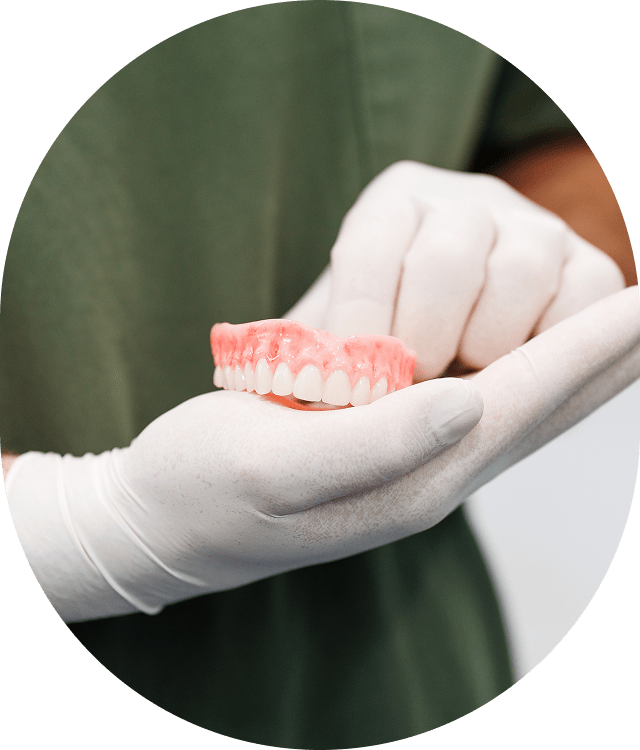
Need quick denture repairs? Our friendly team provides care aimed at improving comfort and function to help you get back to enjoying your favourite foods and daily activities without delay.
Learn About Denture Repairs
at Our Clinic
We provide on-the-spot denture repairs, with most completed within 30 minutes for $260. This option is ideal if you need your dentures restored quickly and conveniently.
For less urgent cases, we also offer overnight repairs at $190. No appointment is required, though patients needing repairs after 3:30 pm should call ahead.
Why Choose Crown Holistic Dental for Dentures
Custom Dentures With a Focus on Fit
Our dentures are individually made to suit each patient’s bite and oral structure. This supports everyday activities such as eating and speaking. Results vary, and adjustments may be required, but each set is designed with function in mind.
Balancing Appearance and Function
We create dentures with attention to both function and appearance. They are designed to sit appropriately and aim to support oral function while also providing a complete smile in a practical, patient-focused way.
Support During Adjustment
Adapting to dentures can take time. Our team provides follow-up care, advice, and adjustments where needed. Patients are given clear guidance on use and maintenance to support a smoother transition, with ongoing professional input available if concerns arise after fitting.
Considering Everyday Needs
Dentures are intended to help support speech, eating, and oral function in daily life. We discuss individual preferences and lifestyle factors to help create designs that are practical and aligned with long-term oral health management.
Common Signs You Need a Repair
-
Changes in comfort, function, or appearance may signal it’s time for denture repairs. Addressing issues early can help maintain a comfortable fit and avoid more complex adjustments later.
Look out for:
- Visible cracks, chips, or wear on the denture base or teeth
- Ongoing discomfort, rubbing, or sore spots
- Dentures that feel loose, unstable, or shifting when speaking
- Increased difficulty chewing or changes in speech clarity
Why Timely Denture Repairs Matter for Comfort
-
When dentures are promptly repaired, they can feel more natural to wear and easier to manage throughout the day. Early attention may also minimise the likelihood of further wear or damage.
Benefits include:
- Helping dentures stay comfortably in place
- Reducing rubbing, friction, or gum tenderness
- Making it easier to speak without distraction
- Allowing meals to be enjoyed with less effort
Need Denture Repair Services? Schedule An Appointment Now
Schedule an appointment to have cracked, chipped, or loose dentures assessed. A dentist will discuss possible repair options, outline timeframes, and explain the care required while repairs are completed to help maintain comfort and oral function.
The Denture Repair Process at Crown Holistic Dental
Initial Consultation and Assessment:
Your visit starts with a conversation about the issues you’ve experienced. The dental team examines your dentures to identify visible and underlying damage, then discusses suitable repair options. This stage helps create a tailored plan that considers your comfort, function, and any additional adjustments that may be needed.
Professional Cleaning and Preparation:
Dentures are carefully cleaned to reduce plaque, stains, and debris, providing a clear surface for accurate adjustments. This step also gives the dentist an opportunity to check for hidden cracks or wear, making it easier to address areas of concern during the repair process.
Precision Repair and Adjustment:
Depending on the type of damage, specialised materials and techniques are used to address cracked, loose or broken dentures. Adjustments are made to improve stability and fit, which can include loose denture repair to reduce movement and improve comfort.
Final Fitting and Comfort Check:
After repairs are complete, dentures are placed to check their fit, bite alignment, and overall comfort. Any fine-tuning is completed on the spot, and guidance is provided on proper care to help maintain their condition and reduce the chance of further issues developing.

Frequently Asked Questions
Can a broken denture be repaired?
Yes, a broken denture can often be repaired, depending on the type and extent of the damage. If the break is minor and the denture pieces are intact, repairs can sometimes be addressed without complex intervention. If the damage is sudden, such as after an accident, urgent denture repairs may be possible. This will depend on the nature of the break and the availability of materials.
That said, not all dentures are suitable for repair, especially if they’ve fractured in several places or become too worn. Our team will examine the damage and discuss your options. If needed, we may recommend a reline, rebase, or a new denture to restore fit and function.
If you have broken dentures or if your denture no longer feels stable or comfortable, it’s a good idea to have it assessed early. Minor issues not addressed may lead to more complex problems over time.
How much does a denture repair cost?
At Crown Holistic Dental, the cost of a damaged denture fix varies depending on the type of service and how quickly the repair is required.
- On-the-spot repairs:
Starting from $260. Most repairs can be completed within 30 minutes, making them a convenient option for patients who need their dentures repaired the same day. - Overnight repairs:
Starting from $190. These are usually ready the next day and may be recommended if the repair is more complex or requires more time in the lab.
In most situations, no appointment is needed. If attending after 3:30 pm, a quick phone call is appreciated so the team can confirm if same-day service is still possible.
Costs may be higher if additional procedures, such as a reline or rebase, are required. During your visit, your denture will be assessed, and a tailored quote will be provided to help you understand the options available.
How long does it take to repair a denture?
Repair time depends on the type of damage and the method required. For clean breaks or minor cracks, cracked denture repair at a dental clinic may be completed on the same day in some cases.
For more complex damage, such as relines or rebasing, repairs may take between 24 and 72 hours. This is especially true when custom adjustments or materials are required to achieve an optimal fit and comfort.
To minimise inconvenience, we recommend contacting our team as soon as possible. We’ll assess the issue as quickly as possible and let you know how long the process is likely to take.
Can a dentist repair a broken denture on the same day?
A broken denture may be repaired on the same day, particularly if the damage is minor and the materials are intact. Clean breaks or small fractures are often simpler to manage quickly.
However, not all repairs can be completed within a single visit. If the denture requires a reline or structural reinforcement or has multiple breakpoints, more time may be needed to provide a comfortable and functional result.
Once we assess the damage, our team will inform you of what to expect, including the estimated timing. We aim to make the process as efficient and comfortable as possible.
Are worn or cracked dentures repairable?
The success of a cracked denture repair depends on the condition of the base and how early the damage is addressed. Minor fractures, surface wear, or a chipped tooth can usually be addressed without needing to replace the entire denture.
However, if the denture is repeatedly cracking, feels unstable, or no longer fits well, a more extensive option may be needed. In these cases, our team might recommend a reline, rebase, or new denture, depending on the condition of the materials and how your mouth has changed over time.
The right way to know what’s possible is to have your denture assessed. A proper evaluation helps determine whether a repair will be effective or if a longer-term option would better support comfort and function.
What causes dentures to keep breaking?
Broken dentures can occur repeatedly for several reasons, often related to how they fit, how they’re used, or their age. Some of the most common causes include:
- Ageing materials:
Over time, denture acrylic can weaken, making it more susceptible to cracking or fracturing. - Poor fit:
Changes in your jaw and gums can cause your denture to shift or become loose, putting uneven pressure on specific areas. - Biting pressure:
Chewing hard foods regularly, such as nuts, can place extra strain on the denture. This added pressure may lead to wear or stress fractures over time, especially if the denture is already worn or poorly fitting. Uneven wear can also create stress points. Adjustments for worn dentures can help balance bite pressure and reduce the chance of future fractures. - Accidental drops:
A fall in the sink or onto rough surfaces is one of the most common causes of sudden denture damage. - Unnoticed wear: Small cracks or thinning areas may worsen over time if not reviewed during regular checkups. In some cases, this may result in further damage or necessitate additional repairs.
Repeated fractures or cracks may signal the need for more than a simple cracked denture repair. In some cases, a reline or rebase may be recommended to improve fit and help reduce strain on the denture. Our team can examine the issue and explain what might be causing the damage, as well as recommend steps to prevent it.
Can dentures be adjusted to fit better after repairs?
Yes, dentures can often be adjusted to improve their fit after a repair. Loose denture repair may involve adjustments to support denture fit and function if it causes irritation or no longer fits comfortably. Depending on the condition of the denture and how your mouth has changed over time, adjustments may involve the following:
Reline: A reline reshapes the inner surface of the denture to better fit the current contours of your gums, often improving comfort and stability.
Minor adjustments: These may include polishing pressure points or reshaping the acrylic to manage areas of discomfort and adjust how the denture sits.
- Rebase: A rebase involves replacing the entire acrylic base of the denture while retaining the existing teeth. This can be beneficial if the base is worn but the teeth remain in good condition.
If your denture still feels loose or uncomfortable after a repair, don’t ignore it. Adjustments for worn dentures can often be made to improve the fit and help prevent future issues.
Is denture glue safe for repairs?
Denture glue, also called denture adhesive, is designed to stabilise dentures during wear, not repair them. Using it to manage a crack or break may seem convenient, but it’s not recommended for several reasons, including:
- Limited support:
Adhesives do not completely set and restore the denture’s structure. In some cases, using adhesives may allow the damage to progress if they are used instead of proper repairs. - It can interfere with professional repairs:
Residue from the glue may affect the bond between materials during proper repair. - It may conceal damage:
Covering a crack with adhesive could mask issues that need attention.
If your denture has broken, it is generally recommended to discontinue wearing it and have it assessed. Our team can advise whether a simple repair, adjustment, or replacement is the most suitable step forward.
What material is used for denture repairs?
For a damaged denture fix, dentists often use acrylic resin—a strong, tooth-coloured material that blends with the existing base and teeth. It’s commonly used to manage cracks, replace missing sections, or reshape the fit of a denture. For partial dentures with a metal framework, repairs may involve materials like cobalt-chromium.
Because our team takes a holistic approach, we prioritise biocompatible materials whenever possible, particularly for patients with known sensitivities or health concerns. If you have questions about which materials are suited for your needs, we’re happy to discuss the options available in our on-site laboratory.
Every repair is assessed on a case-by-case basis to maintain comfort, durability, and alignment with your preferences.
What’s the difference between rebase, reline, and repair?
Although they may sound similar, rebase, reline, and repair serve different purposes when it comes to maintaining your dentures:
- Repair:
Addresses specific issues, such as a crack, chipped tooth, or fracture. It restores function without altering the denture’s overall shape or fit. - Reline:
Reshape the underside of the denture to match your gums better. This is often needed when the fit changes due to natural bone loss or gum shrinkage over time. - Rebase:
This procedure replaces the entire pink acrylic base of the denture while preserving the existing teeth. This is usually done when the base is worn or no longer stable.
Are denture repair kits safe or effective?
Denture repair kits are marketed for temporary use, but they are not recommended in most cases. Improper use may compromise the fit or further damage the denture. While they may hold a loose tooth or crack temporarily, they come with significant limitations, including the following:
- Not intended for long-term use:
These kits are designed for short-term relief and may not withstand the pressure of everyday chewing. Continued use could result in a break becoming worse over time. - Risk of poor fit and discomfort:
Inaccurate application can alter the denture’s fit, potentially causing sore spots, pressure areas, or gum irritation. - Use of non-dental materials:
Some over-the-counter adhesives may contain ingredients that are not biocompatible or approved for use in the mouth. Such use could lead to gum irritation or interfere with future professional repairs.
If your denture breaks, it’s a good idea to have it assessed professionally. Our team can help restore your denture with materials and techniques that support long-term comfort.
Is it safe to repair broken dentures at home?
Trying a damaged denture fix at home is generally not considered safe. While it may be tempting to address a visible crack or reattach a tooth yourself, home repairs can cause more harm than good. Here are some reasons why:
- Household glues are not made for oral use and may contain toxic or irritating ingredients.
- Improper alignment can affect how the denture fits, causing sore spots, difficulty chewing, or further damage.
- DIY touch-ups may limit future repair options. Bonding materials can interfere with dental adhesives and compromise repair integrity.
If your denture breaks, please discontinue use and contact our team for an assessment. We can restore its function safely, using appropriate materials and techniques that support your comfort and oral health.
Fund My Dental