

Clear, Gentle Approach to the Dental Implant Procedure
Learn what a dental implant procedure involves, from consultation to restoration. This guide explains how dental implants work and the treatment stages, with outcomes varying by individual needs.
Your Guide to the
Implant Journey Ahead
Many patients feel unsure about what to expect during a dental implant procedure. Questions about comfort, healing, and outcomes are normal. Without clear information, the process can feel overwhelming and uncertain.
That’s why we explain how dental implants work and outline the tooth implant process step by step — from consultation to placement and restoration — so you understand what’s involved and can make informed decisions.
Why Patients Choose Crown Holistic Dental for Dental Implants
Implants Designed for Oral Function
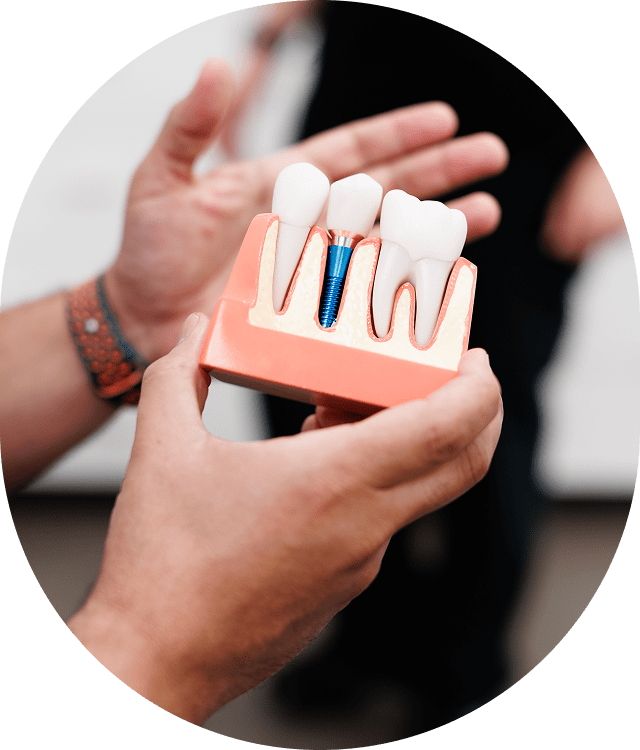
Dental implants are commonly used to replace missing teeth and help restore chewing and speaking ability. Using materials recognised for clinical use, our planning focuses on practical considerations within a patient’s overall care. Results vary between patients.
Personalised Treatment Planning
We begin with a comprehensive consultation and clinical assessment. Plans are tailored to each patient’s needs, and alternatives are explained to support informed decision-making. Our approach is to outline expected treatment steps, considerations, and follow-up so patients understand the process and what is required for ongoing care.
Care With Patient Support in Mind
Treatment is planned and carried out with consideration for surrounding oral structures. We explain each stage, provide information about recovery, and outline possible risks. Patients are supported with guidance designed to help them prepare and manage their treatment responsibly.
Ongoing Support for Long-Term Care

Dental implants require ongoing maintenance and follow-up. We provide advice on hygiene, regular check-ups, and long-term care. Professional reviews are important to assess implant condition over time, and our team offers continued guidance as part of overall dental care.
Who Can Get a Dental Implant Procedure?
- People with one or more missing teeth who want a stable, long-term replacement that feels and functions naturally.
- Those with healthy gums and no conditions that could interfere with bone healing or implant placement.
- Candidates who have sufficient jawbone density to support a secure implant.
- Patients considering a dental implant procedure to improve chewing ability, and overall oral comfort.
Benefits of Undergoing a Dental Implant Procedure
- Dental implants can restore function for eating and speaking with a stable implant-supported tooth replacement.
- They help maintain jawbone density and oral structure by stimulating natural bone growth through function.
- Implants require a different type of maintenance compared to removable alternatives like dentures.
- A dental implant procedure may help restore oral function and provide a replacement designed to look natural.
Ready to Begin Your Implant Procedure Journey?
Book a consultation to learn more about the dental implant procedure — including assessment, planning, surgery, and aftercare. We’ll explain the process, risks, and expected outcomes so you can make an informed decision.
How We Carry Out the Implant Process
Consultation and Planning
We begin with a consultation and diagnostic scan to assess oral health, bone structure, and suitability for treatment. During this appointment, we explain how dental implants work and outline the dental implant surgery steps. This stage ensures you have clear information about possible risks, benefits, and expected timeframes.
Dental Implant Surgery
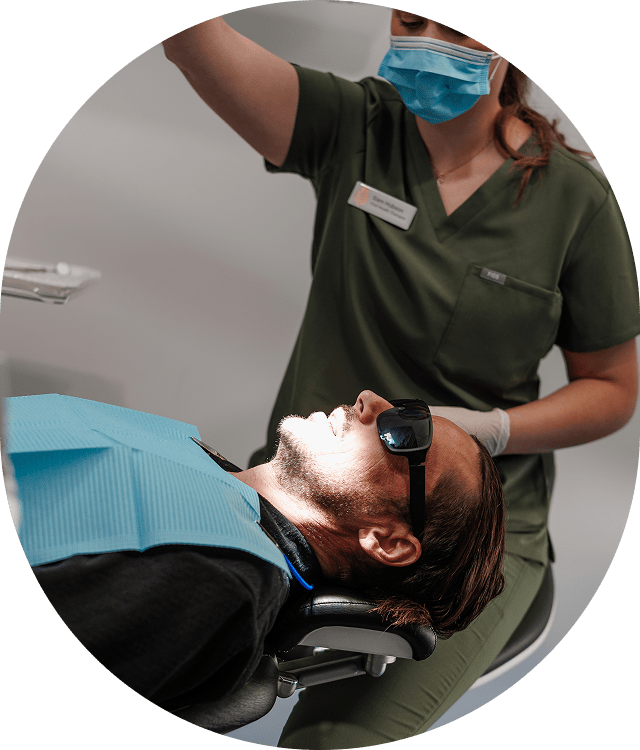
Your treatment plan guides placement of the implant into the jawbone. As part of the dental implant procedure, the dental implant surgery steps are performed under local anaesthesia, with sterile technique and protection of surrounding tissue. You’ll receive post-operative instructions and review appointments to monitor healing and function.
Healing and Integration Phase
After placement, the implant fuses with bone through a process called osseointegration, which generally takes several months. Healing time varies depending on individual health, bone density, and any additional procedures. During this stage, follow-up visits allow the dentist to check stability, provide guidance, and manage any concerns as recovery progresses.
Final Restoration and Follow-Up
Once healing is complete, a custom-made crown, bridge, or denture is attached. At this stage of dental implant treatment, we confirm fit and bite, provide care instructions, and schedule regular reviews. These reviews support ongoing oral health and help maintain the long-term function of the restored tooth implant process.

Frequently Asked Questions
How are dental implants placed from start to finish?
A dental implant procedure is carried out in planned stages. Each phase supports oral health, function, and healing. The process is tailored to individual needs and clinical findings.
- Initial assessment and diagnostic imaging:
A clinical exam and imaging (X-ray or 3D scan) assess bone volume, health, and suitability. Medical and dental histories are also reviewed. Additional procedures like bone grafting may be required. - Personalised treatment planning:
Results guide a tailored plan, including implant material selection, gum condition review, bite alignment, and estimated healing periods. The plan also sets follow-up appointments for safe surgical placement. - Implant placement procedure:
A small biocompatible post is placed into the jawbone under local anaesthesia or sedation. The surgical site is prepared with sterile technique for healing support. - Healing and osseointegration:
Bone gradually fuses with the implant in a process called osseointegration. Temporary restorations may be used. Dentists monitor healing progress and make adjustments if required. - Final restoration and follow-up:
After integration, an abutment is placed. A custom crown, bridge, or denture is secured in place. Regular reviews assess the implant and surrounding tissues over time.
How long does a dental implant procedure usually take?
The full dental implant process generally takes three to six months but varies by healing and clinical needs. It includes consultation, planning, surgery, healing, and final restoration.
- Initial assessment and planning:
One to two visits across one to two weeks, including clinical exam and imaging to confirm suitability. - Implant surgery:
Usually completed in one visit of one to two hours. A post is placed under anaesthesia or sedation. - Healing and osseointegration:
This stage can take three to six months, depending on bone health, healing response, and other procedures. - Final restoration:
A crown, bridge, or denture is secured once the implant integrates.
Some patients may need additional procedures, extending treatment time. Your dentist will provide a personalised estimate.
Is getting a dental implant painful?
A dental implant procedure typically involves minimal discomfort during surgery, as local anaesthesia is used to numb the treatment area. For patients who experience dental anxiety or heightened sensitivity, sedation options may be discussed during the planning phase to support comfort. The procedure itself is not generally considered painful. However, the experience can vary based on individual response, the number of implants placed, and the type of surgery involved.
Are patients sedated or asleep during the implant surgery?
Most dental implant procedures use local anaesthesia while patients remain awake. For anxiety or complex cases, sedation may be considered. Options include oral or IV sedation, depending on clinical assessment.
Sedation is not always required. Decisions depend on medical history, comfort, and treatment complexity. Patients are monitored throughout, and aftercare instructions are provided following anaesthesia or sedation.
What happens after a dental implant is placed?
Healing begins immediately, and the implant gradually integrates with the jawbone. This stage, called osseointegration, may take several months and is monitored through follow-up appointments.
- Early healing:
Mild swelling, tenderness, or bleeding may occur and is temporary. Dentists provide hygiene, diet, and medication guidance for recovery support. - Osseointegration:
Bone bonds with the implant over weeks or months. Progress is checked during scheduled visits. - Temporary restoration:
Sometimes used for appearance or function. Not all patients require this. - Final restoration:
Once integration is complete, a crown, bridge, or denture is placed to restore oral function.
How long does it take for a dental implant to heal?
The healing process following dental implant placement involves several stages. While initial soft tissue recovery may occur within one to two weeks, full integration with the jawbone—known as osseointegration—often takes several months. The total healing timeline can range from three to nine months. This variation depends on general health, bone quality, the number of implants placed, and whether additional procedures were required.
The usual stages of healing include the following:
- Initial healing (one to two weeks)
During the first week following surgery, swelling, tenderness, and minor discomfort are common. These effects usually begin to subside within a few days. Patients are encouraged to eat soft foods and follow oral hygiene instructions to support recovery during this period. - Soft tissue healing (one to two weeks)
The gums and surrounding soft tissues often heal within the first one to two weeks. Some mild redness or sensitivity may persist temporarily. Most patients can resume their normal routine with minor modifications as advised by their dentist. - Osseointegration (three to nine months)
This is the longest and most important phase of healing, where the implant fuses with the jawbone. The timeline for this process depends on multiple factors. These include bone density, implant location (such as upper or lower jaw), general health, and whether bone grafting was required. Healing tends to occur faster in the lower jaw than in the upper. - Final restoration and function
Once integration is confirmed, the abutment and final crown, bridge, or denture are placed. Most patients regain normal chewing function within a few days or weeks following this final step. However, continued monitoring is important as healing and adaptation can progress further over time.
Can you get a dental implant immediately after tooth removal?
Sometimes an implant can be placed immediately after removal if the bone is dense, healthy, and infection-free. This approach reduces treatment time but requires careful assessment.
If unsuitable, early placement may occur after 3–8 weeks, or delayed placement after 12+ weeks. Timing depends on bone condition, infection, and healing needs.
Do you get a temporary tooth while waiting for the implant to heal?
In many cases, a temporary tooth replacement may be provided while the site heals. Options include removable dentures, bonded bridges, or provisional crowns.
Not all patients require temporary replacements. Suitability depends on implant location, oral health, and appearance needs. Final restoration is placed once healing and integration are confirmed.
Can multiple implants be done on the same day?
Yes, multiple dental implants may be placed during one visit if oral and general health allow and sufficient bone is available for support.
Suitability depends on bone quality, implant location, and whether other procedures are required. Your dentist will determine the safest approach based on assessment and goals.
Can a dental implant be placed in one day?
In some cases, a dental implant may be placed and restored with a temporary tooth on the same day. This is called immediate loading.
Not all patients qualify. Suitability depends on bone density, implant stability, bite pressure, and health. If the criteria are not met, a staged approach is safer.
Do dental implants always require a bone graft?
Not all dental implant procedures require grafting. A bone graft may be recommended if bone is insufficient to stabilise an implant securely.
Diagnostic imaging assesses bone condition. If inadequate, grafting supports long-term stability. Need for grafting is determined individually at consultation.
What are the potential complications of the implant procedure?
Like any surgery, dental implant treatment carries risks. Complications are uncommon but possible and vary with health and healing factors. These are discussed at consultation and managed through follow-up care.
Infection at the implant site
Delayed or incomplete healing
Implant mobility or lack of integration
Injury to nearby teeth, nerves, or vessels
Gum recession or inflammation
Loosening of crown, abutment, or prosthesis
Factors such as smoking, chronic illness, or poor hygiene can increase risks. Regular follow-ups and good care support healing and long-term stability.
Fund My Dental