
Enhance Your Smile with Porcelain Veneers in Joondalup
Improve your smile with porcelain veneers in Joondalup. Ideal for chipped, stained, or uneven teeth, veneers offer customised oral care that improves your smile's appearance.
Understanding the Purpose of
Cosmetic Veneers

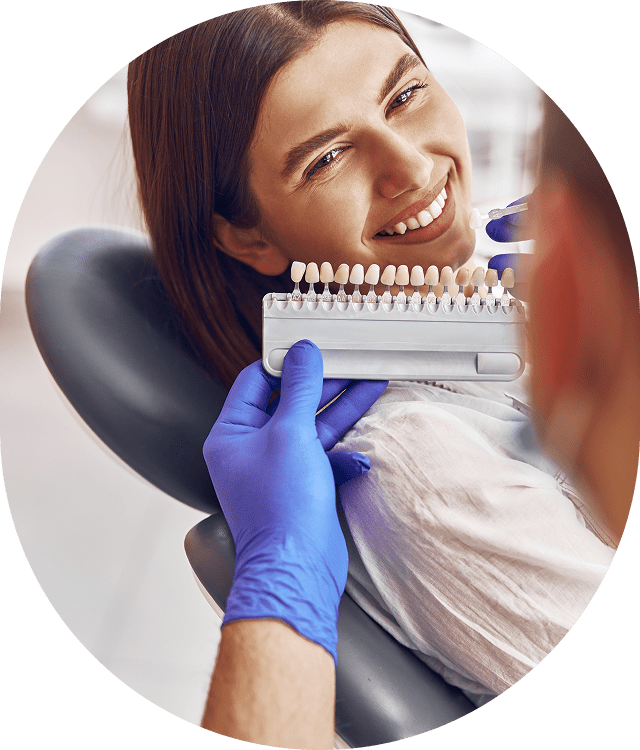
Minor chips, localised stains, and uneven tooth edges can alter the appearance of teeth. Veneers are an option to change a tooth’s shape and colour where clinically appropriate.
Cosmetic veneers in Joondalup are a conservative care option that improves the shape, colour, and alignment of teeth. Custom veneers for teeth are individually designed to blend with your natural teeth. A dental assessment is essential to determine suitability and if the care option aligns with your oral health.
Why Choose Crown Holistic Dental for Cosmetic Dentistry
 Personalised Care for Individual Smiles
Personalised Care for Individual Smiles Cosmetic dentistry is approached with each person’s unique features in mind. We discuss goals, consider natural appearance, and explain how different treatments may align with oral health needs. Treatments are planned accurately, with results varying between patients depending on their circumstances.
 Techniques That Respect Tooth Structure
Techniques That Respect Tooth Structure Our approaches are designed to conserve tooth structure where possible, while addressing appearance. Each step of treatment is explained, and patients are encouraged to ask questions. This supports informed participation in care and provides clarity about both the potential benefits and the limitations of cosmetic treatment.
 Balancing Health and Appearance
Balancing Health and Appearance Before recommending cosmetic options, we assess bite, gums, and teeth so that oral health is prioritised. Only treatments suited to the patient’s needs are discussed, with both functional and aesthetic factors considered.
 A Supportive Care Setting
A Supportive Care Setting We provide treatment in a professional and welcoming environment, with emphasis on clear communication and patient involvement. Patients are encouraged to discuss goals openly, and we outline available options without pressure. This approach helps support patients in considering cosmetic dentistry responsibly as part of their overall dental care.


When Veneers May Be Worth Considering
- Chips or cracks in teeth can alter their appearance; veneers may be a suitable procedure option after a dentist’s assessment.
- Some deep stains do not respond to whitening; veneers may sometimes be considered for changing tooth colour.
- Some people choose veneers to change tooth shape or length. Suitability depends on oral health.
- Veneers are long-term and require professional advice about risk, longevity, and suitability.
Long-Term Aesthetic Benefits of Veneers
- With appropriate care, veneers may help maintain their colour over time. Regular dental monitoring is recommended.
- Veneers can be used to change the shape or size of some teeth, depending on suitability.
- In some cases, veneers may cover discolouration, small chips, or minor misalignment. Results vary.
- Veneers are a cosmetic option that, with appropriate care, may last for many years. Longevity varies between patients.
Book A Consultation to Find Out Which Cosmetic Options May Suit You
Explore your cosmetic options in a supportive, health-focused setting. Our cosmetic dental clinic in Joondalup blends aesthetics with function to support both your smile and your overall well-being.
From Consultation to Placement: Veneers Explained

Initial Consultation and Suitability Assessment
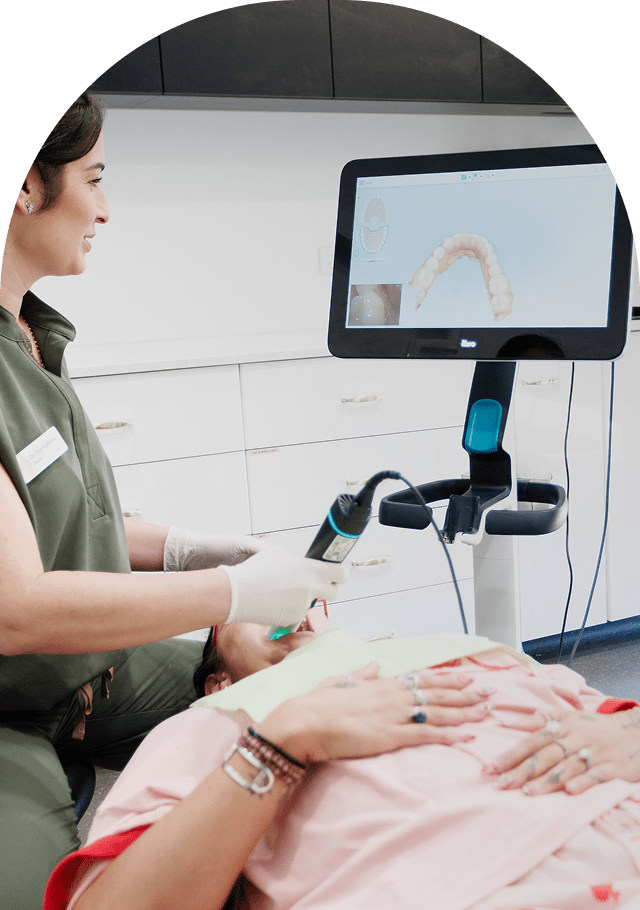
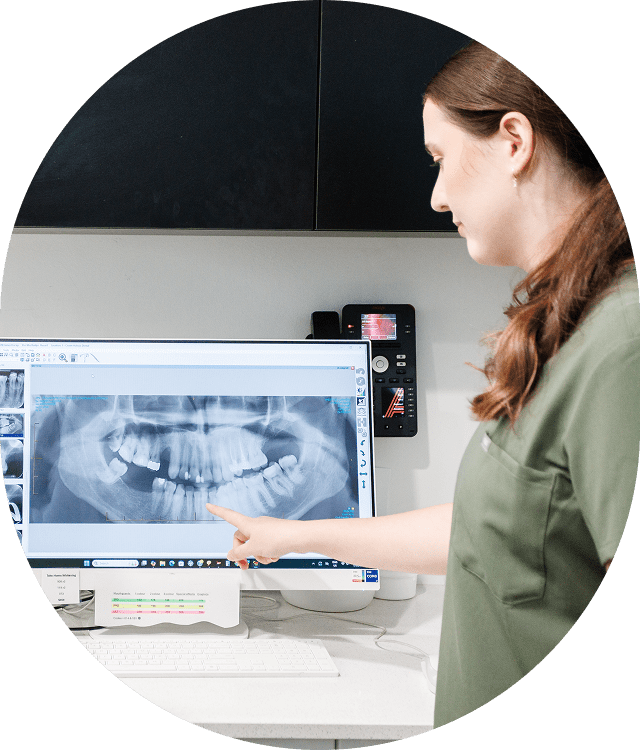
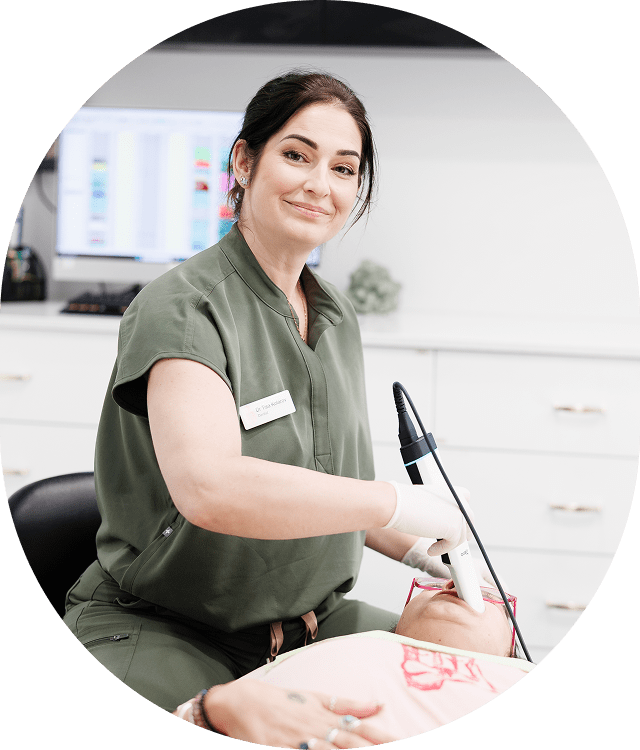
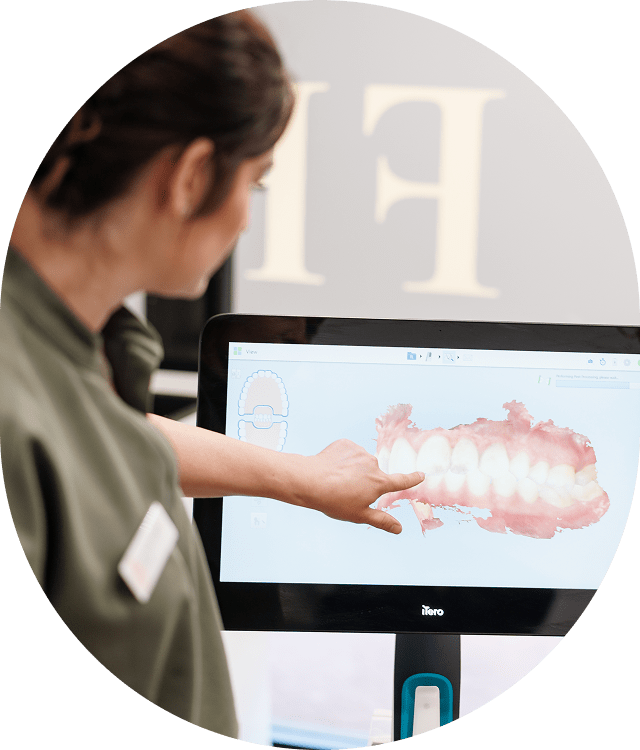
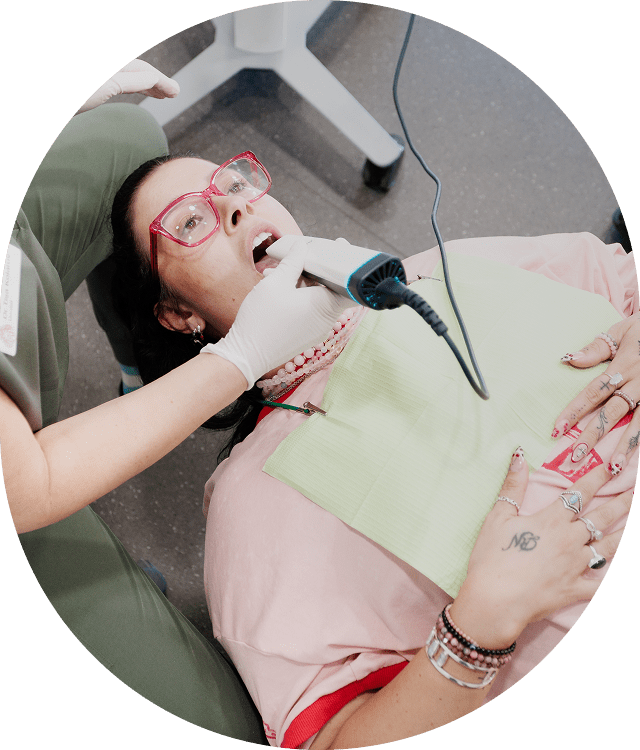
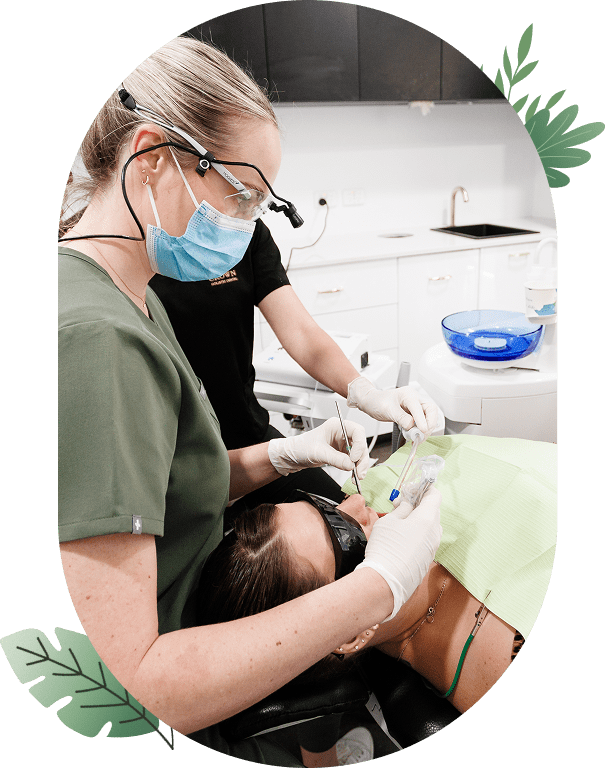
Your dentist will assess your oral health, discuss your goals, and determine whether veneers are suitable for your needs. X-rays, photos, or digital scans may be taken. This appointment also includes a discussion of benefits, limitations, costs, and alternative care options.

Planning and Smile Design
If natural-looking porcelain veneers are suitable, your dentist will plan the appropriate shape, shade, and size. Impressions or digital scans assist with creating custom designs that aim to complement your facial features and support a balanced, natural-looking result tailored to your oral health needs.

Tooth Preparation and Temporary Veneers
A small amount of enamel is carefully reduced to prepare for veneer placement. Temporary veneers may be used to protect the teeth and offer a general preview, although the final result can vary depending on materials, fit, and clinical considerations.

Final Veneer Placement and Follow-Up Care
Once ready, the veneers are bonded to your teeth. Your dentist will refine the fit and comfort as needed. You’ll receive care instructions and advice about follow-up visits to help support longevity. Outcomes vary depending on individual care and oral health.





Frequently Asked Questions
How long do porcelain veneers usually last?
Porcelain veneers are known to last around 10 years on average, and some studies suggest they can remain effective for up to 25 years with care and maintenance. Their longevity depends on several factors, including your oral hygiene, habits, and dental alignment.
The following factors affect the lifespan of porcelain veneers:
- Oral hygiene routine:
Brushing and flossing daily helps protect your veneers and natural teeth from decay and gum disease. - Diet and eating habits:
Avoiding foods like nuts, ice, and sticky sweets such as toffees, caramel chews, and gummy lollies helps prevent damage or loosening of your veneers. - Teeth grinding (bruxism):
Grinding your teeth at night can wear down or fracture your veneers over time. - Bite alignment:
An uneven bite can place extra pressure on specific veneers, potentially shortening their lifespan. - Regular dental visits:
Ongoing checkups allow your dentist to monitor your veneers and address issues before they worsen. - Avoiding harmful habits:
Biting your nails, chewing pens, or crunching ice can lead to chips or cracks in the porcelain.
What happens to natural teeth under porcelain veneers?
When receiving natural-looking porcelain veneers, your teeth are prepared so the veneer can be securely fitted and bonded.
- Your dentist will excise a thin layer of enamel to allow the veneer to fit and bond securely to the tooth surface.
- Your natural teeth remain beneath the veneers and provide a stable foundation after minor reshaping of the tooth surface.
- Each veneer is bonded to your tooth using a dental adhesive commonly used in cosmetic dentistry procedures.
- Veneers are irreversible because enamel doesn’t regrow after being removed.
- Maintaining proper oral hygiene is essential to protect the health of your teeth and gums underneath and around your veneers.
Your dentist will determine if veneers are suitable for you after assessing your teeth, gums, and bite alignment.
Do porcelain veneers require the tooth to be shaved?
Yes, porcelain veneers usually involve a small amount of enamel reduction. In some cases, minimally invasive veneers may require little to no enamel removal.
- Your dentist may clear a small amount of enamel from the front of the tooth. This creates space for the veneer to fit securely and align with surrounding teeth.
- Only a thin layer—often less than one millimetre—is carefully reduced. This conservative approach helps preserve most of your natural tooth structure.
- Enamel removal is not reversible because enamel does not regenerate once it has been reduced. Veneers are considered a long-term option and may require replacement over time.
- Reshaping helps the veneer fit evenly on the tooth surface and align with your bite. Outcomes vary depending on individual oral health.
- Your dentist will reduce only the enamel necessary to support the veneer. The approach is designed to preserve as much natural tooth structure as possible.
- Your dentist will conduct a full assessment before starting any procedure. It helps determine whether veneers are appropriate based on your teeth, gums, and oral health needs.
Can you go back to your natural teeth after veneers?
No, you cannot return your teeth to their original state once veneers are placed. During the procedure, your dentist reduces a thin layer of enamel, which does not grow back.
Here’s what you should know:
- Enamel is reduced during veneer preparation to allow for a proper fit.
A small amount is reshaped so the veneer can bond securely to the tooth. - Your natural teeth remain beneath the veneers, providing support.
The underlying tooth structure provides a foundation for the veneer to function as intended. - Once prepared, teeth will always require some form of restoration.
After enamel is altered, veneers or similar restorations are needed for long-term protection. - Veneers may need replacement over time due to wear.
Longevity varies between patients and depends on oral hygiene, bite alignment, and lifestyle factors. - Your dentist will assess whether veneers are right for your needs.
You’ll receive personalised advice based on your goals, oral health, and suitability for the procedure.
Do porcelain veneers stain or discolour over time?
Porcelain veneers are generally resistant to stains; however, their appearance may still change over time due to factors related to oral health or lifestyle.
- Porcelain has a non-porous surface, which means veneers do not absorb pigments in the same way natural enamel does. However, lifestyle factors can still affect their appearance over time.
- The bonding resin may discolour over time. The bonding cement at the edges of veneers may darken gradually, particularly if not maintained through regular dental care.
- Natural teeth surrounding veneers may still stain or discolour, which can create a contrast between veneered and non-veneered teeth.
- Plaque buildup may cause staining near the gums. Poor oral hygiene allows plaques and tartar to accumulate around the veneer margins, causing localised discolouration.
- Lifestyle habits can influence discolouration. Consumption of coffee, red wine, and tobacco products can stain the natural teeth and the edges of veneers.
- Professional cleaning supports long-term appearance. Regular dental cleans help maintain cosmetic veneers in Joondalup by removing surface stains and supporting the health and aesthetics of both veneers and natural teeth.
Are porcelain veneers painful to get?
Porcelain veneer is generally well-tolerated. Local anaesthetic is commonly used to reduce discomfort during the procedure. Mild sensitivity may occur afterwards, but the sensation usually fades within a few days.
If you are anxious or have sensitive teeth, your dentist can discuss additional options to support your comfort.
- Local anaesthetic is used to help maintain comfort during the procedure.
- Only a small amount of enamel is reduced from the tooth.
- Mild sensitivity usually settles after a few days.
- Veneers do not involve the nerve inside the tooth.
- Some patients report pressure during the procedure. Experiences vary, and your dentist will explain what to expect.
- Sedation options are available for anxious or sensitive patients.
How do porcelain veneers compare to composite veneers?
Porcelain and composite veneers are two options that may change the appearance of teeth. They differ in material, durability, stain resistance, cost, and application method. Suitability depends on individual oral health and should be assessed by a dentist.
| Feature | Porcelain Veneers | Composite Veneers |
| Material | Ceramic material, made in a dental lab | Tooth-coloured composite resin |
| Appearance | Designed to be translucent and blend with teeth | Usually, it is more opaque in appearance |
| Durability | May last 10–15 years or more, depending on oral health and care | Typically lasts 4–8 years with maintenance |
| Stain Resistance | Less likely to stain than resin | More prone to discolouration over time |
| Cost | Generally higher, due to lab fabrication | Generally lower, applied directly in the clinic |
| Estimated Time | Usually completed over two visits | Often completed in a single appointment |
| Repairability | Damaged veneers may need replacement | It can often be repaired chairside |
| Tooth Preparation | Involves moderate enamel removal | Often requires less enamel removal |
| Common Uses | Chosen where a longer-term option is preferred | Chosen where a shorter-term or lower-cost option is preferred |
How do I take care of porcelain veneers after placement?
Porcelain veneers require the same daily care as natural teeth, plus some additional steps to help reduce the risk of damage or staining.
Recommended care tips:
- Brush your teeth twice a day using a soft-bristled toothbrush and non-abrasive fluoride toothpaste to avoid scratching the porcelain surface.
- Floss gently once a day to reduce plaque between the teeth and along the veneer margins, helping to prevent gum inflammation.
- Avoid biting into tough objects such as ice, pens, or fingernails, as this can chip or fracture the veneers.
- Limiting coffee, tea, red wine, and tobacco may help reduce staining around veneers and on natural teeth.
- If you grind or clench your teeth at night, a custom night guard can help reduce pressure and protect your custom veneers for teeth from potential damage.
- Schedule regular dental checkups and professional cleans so your dentist can monitor the veneers and maintain your overall oral health.
Are porcelain veneers worth the investment?
Porcelain veneers are one care option that may change the appearance of teeth. Suitability depends on oral health, lifestyle, and individual goals and will be assessed by a dentist.
Factors to consider when deciding on porcelain veneers:
- Aesthetic results:
Veneers may be used to change the appearance of chipped, uneven, or discoloured teeth. Results vary between individuals. - Durability:
It may last for many years; however, its longevity varies and depends on factors such as oral hygiene, bite alignment, and lifestyle. - Stain resistance:
Porcelain is generally resistant to staining, but natural teeth surrounding it may still discolour over time. - Cost:
You may pay more for porcelain veneers than for composite ones, as they are made using high-quality materials and are lab-fabricated. - Irreversibility:
The procedure involves removing a thin layer of enamel from your teeth, which cannot be restored once it has been taken away. - Maintenance:
To maintain your veneers, it is essential to brush and floss daily, along with regular checkups to support long-term oral health.
What is the process of getting porcelain veneers?
Getting porcelain veneers usually involves several steps across multiple appointments. Your dentist will assess whether this procedure is suitable for your oral health and individual goals.
- Initial consultation:
Your dentist will assess your oral health, discuss your goals, and evaluate whether porcelain veneers are appropriate for you. - Plan:
Your dentist may use scans, photos, or impressions to determine the shape and colour of your veneers. - Tooth preparation:
A thin layer of enamel is carefully reduced from the front of each tooth to make space for the veneers. - Temporary veneers (if needed):
Temporary veneers may be placed to protect your teeth while the final porcelain veneers are created in a dental laboratory. - Veneer placement:
Your dentist will check the fit of the veneers before bonding them to your teeth with dental adhesive. - Follow-up appointment:
A review visit is usually scheduled to assess your bite, check comfort, and make any necessary adjustments.
How long does the entire porcelain veneer process take?
Porcelain veneer often takes two to four weeks, but the timeline varies. The timeline may vary depending on your oral health, the number of veneers required, and whether temporary veneers are needed.
- Week 1—Consultation and preparation:
During your first visit, your dentist will examine your teeth, take scans or impressions, and, if veneers are suitable, prepare your teeth by removing a thin layer of enamel. - Week 2 – Laboratory Work and Temporary Veneers:
While your custom veneers for teeth are being prepared in a dental laboratory, temporary veneers may be placed to protect them. - Week 3 or 4 – Final placement:
Once the porcelain veneers are ready, your dentist will review the fit, make any necessary adjustments, and bond them to your teeth with dental adhesive.
Can veneers be removed?
A dentist can place porcelain veneers, but the procedure is not reversible. A thin layer of enamel is excised during preparation, and enamel does not regrow. If veneers are taken off, they are usually replaced to protect the tooth.
- Veneers are bonded to prepared teeth using a resin-based dental adhesive commonly used in dentistry.
- Tooth enamel is irreversibly altered. A small portion of enamel is reduced to allow proper fit and placement of the veneer, which cannot be restored.
- Tooth sensitivity may occur after removal. If veneers are reduced and not replaced, exposed enamel may increase sensitivity to temperature or pressure.
- Replacement is commonly recommended after removal to protect the underlying tooth and restore function.
The procedure is not reversible. Since enamel does not regenerate, this results in an irreversible alteration of the natural tooth structure.
How much do porcelain veneers cost?
Porcelain veneers at Crown Holistic Dental start at $970 AUD. The cost varies depending on the number of veneers required, the complexity of the procedure, and any additional procedures. At Crown Holistic Dental, the final cost may also reflect the use of laboratory fabrication and digital planning tools, where appropriate.
Before proceeding with cosmetic veneers in Joondalup, your dentist at Crown Holistic Dental will complete a comprehensive assessment and provide a written care plan with an itemised quotation outlining
What are the long-term considerations with porcelain veneers?
Porcelain veneers are a long-term option that involves irreversible changes to tooth structure. They require ongoing care to support oral health and maintain the restoration.
- Durability:
Porcelain veneers can last for many years with proper care, but their longevity varies depending on individual habits, bite alignment, and oral hygiene practices. Your dentist will discuss these factors with you. - Replacement:
Veneers can chip, loosen, or wear over time and may need to be replaced depending on individual circumstances. - Irreversibility:
A thin layer of enamel is reduced during the procedure, which means it cannot be reversed. - Oral hygiene:
Maintaining regular brushing, flossing, and dental checkups is essential to protect both veneers and underlying teeth. - Lifestyle habits:
To help protect veneers, avoid grinding teeth, chewing tough substances such as ice or nuts, and using teeth as tools, as these habits may contribute to premature wear or damage.


 Holistic Dentistry
 Children’s Dentistry
 Mouthguards
 Dentures
 Dental Implants
 Cosmetic Dentistry
 General Dentistry
 Emergency Dentistry
 Sedation & Sleep Dentistry
 Afterpay
 Fund My Dental