
Supporting Oral Development Through Tongue-Tie Assessments in Joondalup
Tongue function plays a key role in early development. We provide evidence-based tongue-tie assessments in Joondalup to help identify factors that may affect feeding, speech, and oral function in children.

How Tongue Mobility Impacts Early Development


Some children experience challenges with feeding, breathing, or early speech, and the cause is not always clear. In some cases, restricted tongue movement may contribute to these difficulties.
If not assessed, tongue restrictions may cause frustration during meals, unsettled behaviour, or delayed communication. Through early oral restriction evaluation, we assess tongue function and identify factors that may influence development. This can guide appropriate support for feeding, speech, and oral development.
Why Choose Crown Holistic Dental for Children’s Dentistry
 Creating Comfortable Dental Visits
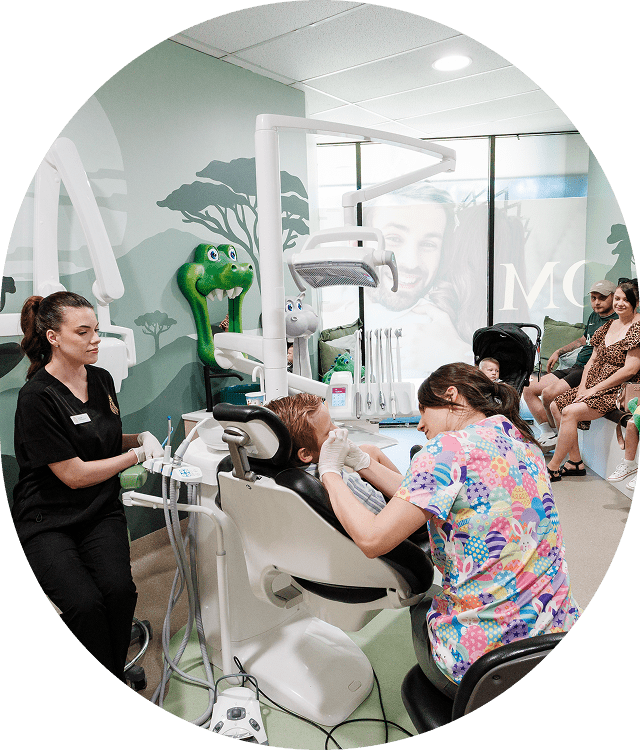
Creating Comfortable Dental Visits We aim to make dental visits calm and child-friendly. Using clear explanations and good communication, our team works to help children feel at ease. This supportive approach encourages familiarity with oral care and helps children gradually adjust to receiving dental treatment as they grow.
 A Patient-Focused Approach for Young Smiles
A Patient-Focused Approach for Young Smiles Every child is different, so we adapt techniques to suit their age and comfort level. With a calm and patient approach, we strive to provide care that is considerate and supportive of your child’s developing oral health.
 Partnering With Parents
Partnering With Parents Parents are central to every stage of care. We explain findings clearly, provide practical advice for home routines, and involve families in decision-making. This collaborative approach supports families in maintaining their children’s oral health.
 Prevention From the Start
Prevention From the Start Preventive care is the foundation of children’s dentistry. Through check-ups, patient education, and preventive treatments such as fissure sealants, we aim to identify and address issues early. This may help reduce the likelihood of needing complex treatments and can support long-term oral health.




Signs Your Child May Need an Assessment
- Difficulty latching, clicking during feeds, or dribbling may indicate an infant tongue-tie or oral restriction.
- Slow weight gain or prolonged feeding can reflect inefficient milk transfer or fatigue.
- Speech delays involving “t,” “d,” or “l” sounds may relate to limited tongue mobility.
- Picky eating or struggles with chewing may be linked to child tongue-tie symptoms or reduced oral function.
Benefits of Early Tongue-Tie Evaluation
- May support feeding by helping to reduce challenges such as dribbling, clicking, or prolonged sessions during breastfeeding or bottle feeding.
- Helps identify possible feeding challenges early, which may assist with comfort and milk transfer.
- May support healthy oral development and tongue mobility, which can be important for speech, chewing, and swallowing.
- Early evaluation may allow timely intervention, which can help reduce the need for more complex therapy as your child grows.

Book a Tongue-Tie Assessment in Joondalup Today
Our tongue-tie assessments in Joondalup evaluate feeding, speech, and oral function concerns in infants and children. Schedule a consultation to understand your child’s needs and explore the most suitable next steps.
How We Assess Your Child’s Tongue Movement


Discussion of Concerns and Feeding History
We begin by listening to your concerns. Feeding challenges, speech delays, or oral habits all provide valuable context. Your observations help shape the clinical assessment. This allows us to focus on relevant symptoms that may be affecting your child’s comfort, function, or development at home or during daily routines.

Movement Observation and Mobility Check
We observe how the tongue moves—whether it can lift, extend, and move from side to side without strain or compensation. Subtle restrictions may not be obvious visually. That’s why we assess whether your child’s tongue mobility may affect essential activities such as feeding, speech, or swallowing.

Frenulum and Tissue Examination
Using careful palpation and visual inspection, we assess the underside of the tongue and lingual frenulum. We examine for tension, thickness, or tightness that may be affecting movement. Even if no restriction is visible at rest, our process helps reveal functional limitations that impact daily activity.

Function-based Evaluation by Age
Depending on your child’s age, we assess latch quality, suck-swallow coordination, or how the tongue behaves during chewing or speech. These real-life activities form part of an oral restriction evaluation. This helps determine whether intervention, support, or simple monitoring may be the most appropriate next step.





Frequently Asked Questions
How do you assess a child for tongue-tie?
At Crown Holistic Dental, our infant tongue-tie assessment in Joondalup focuses on understanding how the tongue is functioning—not just how it looks. We assess each child based on age, symptoms, and daily challenges related to feeding, speech, or movement.
- Discussion of concerns
We begin by listening to the concerns you’ve noticed at home. These may include difficulty breastfeeding, excessive dribbling, delayed speech, or chewing struggles. Your insights help guide the clinical assessment. - Tongue movement evaluation
Our team observes how your child’s tongue moves—whether it can lift, extend, or move side to side. We also assess whether these movements are restricted or compensated in any way. - Examination of the tongue and frenulum
We inspect the tongue’s underside and the tissue connecting it to the mouth’s floor. Palpation helps us assess for tension or tightness that may not be visible at rest. - Age-specific functional observations
In babies, we may observe latch quality, milk transfer, or signs of feeding fatigue or fussiness. In older children, we look at how the tongue moves during speech or chewing and whether posture or oral habits may be contributing to functional challenges. - Clinical review and next steps
We explain our findings in clear, parent-friendly language and discuss the most appropriate next step. Monitoring, providing age-appropriate strategies, or exploring treatment options may be necessary if the affected function is evident.
What are the signs that my child may have a tongue-tie?
Signs of tongue-tie can vary with age and may affect feeding, speech, or oral function. Some of the signs include:
- Difficulty breastfeeding or bottle feeding:
Babies may struggle to latch, feed inefficiently, or tire quickly. You may notice clicking sounds, fussiness, or frequent breaks during feeding. - Slow weight gain in infancy:
Feeding challenges may be one factor in longer feeding sessions or slower weight gain. Other factors may also be involved, so a thorough assessment is recommended. - Excessive dribbling or milk leakage during feeds:
A poor seal due to limited tongue or lip movement may cause milk to leak from the sides of the mouth. This situation can be accompanied by noisy or inefficient feeding. - Clicking, coughing, or gulping during feeds:
These signs may suggest difficulty maintaining suction or coordinating swallowing. They may also lead to frequent unlatching or swallowing of air. - Gassiness or reflux-like symptoms:
Swallowing excess air while feeding may cause wind, discomfort, or unsettled behaviour. These symptoms can sometimes mimic reflux. - Mouth breathing or snoring in older children:
Tongue posture and tone may affect airway function during sleep. These changes can sometimes lead to mouth breathing or snoring. - Speech difficulties or delayed development:
Some children may struggle with sounds requiring tongue elevation or control, such as “t,” “d,” “l,” or “r.” Further evaluation can be helpful if speech concerns are present alongside signs of restricted tongue movement. - Open-mouth posture or visible tongue restriction:
A child may have difficulty lifting the tongue or resting it against the palate. The tongue may rest low or appear tethered during movement. - Challenges with chewing or swallowing solid foods:
A restricted tongue may make it harder to move food around the mouth. This may affect chewing, swallowing, or the variety of foods that can be eaten.
Not every child with tongue-tie will exhibit these signs. If you notice one or more of these behaviours, a professional evaluation may be appropriate. This can help identify whether tongue function is contributing to the concern.
Who diagnoses tongue-tie in children?
Various qualified professionals with experience in oral function, feeding, and child development can diagnose tongue-tie. Dentists experienced in tongue movement and oral anatomy can assess for restrictions that may affect feeding or speech. In infants, signs like latching difficulty or prolonged feeding may be early indicators of restricted function.
Other health professionals may also play a key role. Lactation consultants often identify early tongue-tie concerns during breastfeeding, while speech pathologists evaluate oral coordination in older children. General practitioners and paediatricians may raise concerns during routine check-ups. In some cases, referral to a specialist for further assessment is appropriate.
At Crown Holistic Dental, we take a collaborative approach to care. Our infant tongue-tie assessment in Joondalup provides families with a professional assessment and insight into their child’s oral function. We work alongside other healthcare providers to help your child receive the care they need at every stage.
What age is appropriate for assessing tongue-tie?
A tongue-tie assessment is a structured process that evaluates both the appearance and function of the tongue. It is tailored to the child’s age, symptoms, and developmental needs.
- Initial consultation and history-taking
The assessment begins with a discussion of any concerns that the parent or caregiver may have. These may include feeding difficulties, speech concerns, breathing patterns, or other functional observations. A detailed medical and developmental history is reviewed to understand the child’s background and guide the examination process. - Functional movement observation
The dentist considers age-specific signs that may suggest tongue-tie. For infants, symptoms may include difficulties with latching, prolonged feeding times, or maternal nipple discomfort. In older children, signs may involve challenges with speech clarity, chewing, or tongue coordination. - Physical examination of the tongue and frenulum
The underside of the tongue and the lingual frenulum (the band of tissue beneath the tongue) are assessed visually and through careful palpation. This process helps determine the presence, thickness, and tension of the tissue. A tongue may appear visually unremarkable at rest but still show restricted movement during function. - Symptom-based assessment
The dentist considers age-specific signs that may suggest tongue-tie. For infants, the symptoms may include difficulties with latch, prolonged feeds, or maternal nipple discomfort. In older children, signs may involve challenges with speech clarity, chewing, or tongue coordination. - Oral posture and breathing evaluation (if applicable)
In some cases, the resting posture of the tongue is assessed to see whether it rests low in the mouth or against the palate. This position may relate to nasal breathing, mouth breathing, or certain oral habits. Posture may provide insight into how the tongue influences oral development over time. - Photographic documentation (optional)
Clinical photographs may be taken to support care planning or to track changes over time. This can be particularly useful when working with other health professionals or for monitoring outcomes in follow-up assessments. - Discussion of findings and next steps
The assessment concludes with a summary of observations and relevant findings. Recommendations are based on your child’s individual needs and may include monitoring, therapy, or referral for further evaluation. The focus remains on function rather than appearance alone.
What is the process of a tongue-tie assessment?
Tongue-tie can be assessed at any age if there are signs that it may be affecting feeding, speech, breathing, or oral function. In newborns, one of the most common concerns is tongue-tie and breastfeeding issues. Parents or lactation consultants may notice poor latch, clicking during feeds, or fatigue. These early signs often prompt an oral restriction evaluation to understand how the tongue moves—not just how it looks.
As kids grow, other signs may appear. Child tongue-tie symptoms may include difficulty chewing, swallowing, or forming speech sounds. These challenges often emerge as a child begins speaking more or transitions to solids. A dentist experienced in assessing tongue movement in Joondalup can evaluate whether the restriction may be affecting oral coordination or function.
There is no ideal age for assessment. What matters most is whether the restriction impacts daily life. The goal is to promote healthy oral development and tongue mobility—whether in infancy, early childhood, or later—through age-appropriate care and personalised guidance.
How does tongue-tie affect feeding or speech development?
At Crown Holistic Dental, we see many families concerned about early tongue-tie and breastfeeding issues. A careful evaluation can help determine whether tongue function is contributing to feeding or speech concerns. If you’re unsure, an infant tongue-tie assessment in Joondalup is a gentle first step. If you’re unsure, an infant tongue-tie assessment in Joondalup may be an appropriate first step.
- Feeding difficulties in infancy:
Restricted tongue movement may make it harder for babies to latch securely during breastfeeding. These tongue-tie and breastfeeding issues may affect suction, sometimes contributing to prolonged or inefficient feeding.” Some babies may also exhibit signs such as clicking, leaking milk, or tiring quickly. - Discomfort or slower weight gain:
Feeding challenges may lead to frustration for the baby and discomfort for the breastfeeding parent. In some cases, these feeding challenges may also contribute to slower weight gain in the baby, although other factors can be involved. - Excess air swallowing and unsettled behaviour:
If a baby struggles to maintain a seal during feedings, they may swallow excess air. These events can result in gas, reflux-like symptoms, or unsettled behaviour after eating. - Chewing difficulties in toddlers or older children:
As children grow, tongue mobility plays a key role in how food is moved and chewed. A restricted tongue may lead to inefficient chewing, food refusal, or fatigue during meals. - Selective eating patterns:
Tongue-tie can sometimes contribute to picky eating, especially if certain textures are difficult to manage. Sensory preferences and developmental stages also influence these behaviours. - Speech sound challenges:
Some children with restricted tongue movement may have difficulty forming certain sounds. These often include sounds that need tongue elevation or control, such as “t,” “d,” “l,” or “r.” - Not all children with tongue-tie experience speech delays:
Tongue-tie affects each child differently. Some patients may speak clearly despite the restriction, while others may require further assessment if speech concerns arise. - Function matters more than appearance:
A tongue may look unrestricted, but still move in a way that limits feeding or speech. A full evaluation looks at how the tongue works in real-life situations—not just how it looks at rest.
What does a tongue-tie look like during an exam?
At Crown Holistic Dental, we see many families concerned about early tongue-tie and breastfeeding issues. A careful evaluation can help determine whether tongue function is contributing to feeding or speech concerns. If you’re unsure, an infant tongue-tie assessment in Joondalup is a gentle first step. If you’re unsure, an infant tongue-tie assessment in Joondalup may be an appropriate first step.
- Feeding difficulties in infancy:
Restricted tongue movement may make it harder for babies to latch securely during breastfeeding. These tongue-tie and breastfeeding issues may affect suction, sometimes contributing to prolonged or inefficient feeding.” Some babies may also exhibit signs such as clicking, leaking milk, or tiring quickly. - Discomfort or slower weight gain:
Feeding challenges may lead to frustration for the baby and discomfort for the breastfeeding parent. In some cases, these feeding challenges may also contribute to slower weight gain in the baby, although other factors can be involved. - Excess air swallowing and unsettled behaviour:
If a baby struggles to maintain a seal during feedings, they may swallow excess air. These events can result in gas, reflux-like symptoms, or unsettled behaviour after eating. - Chewing difficulties in toddlers or older children:
As children grow, tongue mobility plays a key role in how food is moved and chewed. A restricted tongue may lead to inefficient chewing, food refusal, or fatigue during meals. - Selective eating patterns:
Tongue-tie can sometimes contribute to picky eating, especially if certain textures are difficult to manage. Sensory preferences and developmental stages also influence these behaviours. - Speech sound challenges:
Some children with restricted tongue movement may have difficulty forming certain sounds. These often include sounds that need tongue elevation or control, such as “t,” “d,” “l,” or “r.” - Not all children with tongue-tie experience speech delays:
Tongue-tie affects each child differently. Some patients may speak clearly despite the restriction, while others may require further assessment if speech concerns arise. - Function matters more than appearance:
A tongue may look unrestricted, but still move in a way that limits feeding or speech. A full evaluation looks at how the tongue works in real-life situations—not just how it looks at rest.
Does every child with a tongue-tie need a procedure?
Not every child with a tongue-tie will require a procedure. Tongue-tie varies widely in both appearance and impact. Not all children experience functional concerns. Some may adapt and function well without noticeable issues in feeding, speech, or oral development.
A procedure may be considered when the restriction contributes to specific challenges. These may include difficulties with breastfeeding, chewing, swallowing, or producing certain speech sounds. Assessment focuses on how the tongue moves and functions in daily activities—not its appearance alone.
If a tongue restriction is present but not causing problems, ongoing monitoring may be appropriate. Your dental practitioner will work with you to understand your child’s individual symptoms, developmental stage, and needs. Recommendations may involve observation, therapy, or referral for further evaluation.
What is the right time to assess for tongue-tie in babies or toddlers?
Tongue-tie can influence oral development in subtle but important ways, especially when left unassessed during early growth stages. At Crown Holistic Dental, we support families through early evaluation. We provide infant tongue-tie assessment in Joondalup to help identify and manage concerns with tongue function.
A restricted tongue may affect the following areas:
- Tongue posture:
The tongue may rest low in the mouth instead of against the palate. This can impact oral muscle tone and jaw development. - Breathing patterns:
Tongue positioning can affect nasal airflow. A low tongue posture may contribute to habitual mouth breathing. - Palate and jaw development:
Reduced tongue mobility can limit palatal stimulation, which in some cases may contribute to a high or narrow palate as the child grows. - Speech development:
Certain sounds like “t,” “d,” “l,” or “r” may be harder to pronounce clearly, though not all tongue-ties cause speech delays. - Chewing and swallowing:
Restricted movement may lead to inefficient chewing or altered swallowing patterns, influencing food variety and motor coordination. - Tooth spacing and alignment:
Tongue posture and function may contribute to how teeth erupt and align, alongside genetic or airway factors. - Oral habits:
Children may develop compensatory habits such as tongue thrusting or extended dummy use when tongue movement is limited.
A tailored assessment by a qualified tongue-tie dentist in Joondalup helps determine whether any of these developmental patterns are present. It also helps identify if treatment or monitoring may be appropriate to support oral function.
What are common myths or misconceptions about tongue-tie?
There are several common misunderstandings about tongue-tie. These myths can confuse and lead to either unnecessary concern or delayed care. Here are some of the most frequent misconceptions—and what parents should know instead:
- “All tongue-ties are easy to see.”
Some tongue-ties are clearly visible, but others are less obvious and may be hidden under the surface. A thorough functional assessment is often needed to determine whether the tongue’s
movement is restricted. - “If a child can stick out their tongue, it’s not a tongue-tie.”
Protrusion is just one aspect of tongue movement. A child may still have difficulty lifting, cupping, or moving the tongue side to side, which can affect feeding or speech. - “Tongue-tie always causes speech problems.”
Not all children with tongue-tie will experience speech delays or articulation concerns. Every child is different, and speech outcomes depend on multiple factors beyond tongue structure alone. - “Tongue-tie will stretch or improve on its own.”
While some children adapt over time, others may continue to experience functional challenges. Many factors influence tongue movement, and change is not guaranteed without support. - “Every tongue-tie requires a procedure.”
Treatment decisions are based on how the restriction affects function, not just appearance. In some cases, monitoring or supportive therapy may be more appropriate than immediate intervention. - “All feeding issues are caused by tongue-tie.”
Feeding difficulties can result from a range of factors, including latch technique, positioning, muscle tone, or maternal considerations. A full assessment can help identify the root cause. - “A quick visual check is enough to diagnose tongue-tie.”
A complete evaluation involves more than a visual inspection. Functional movement during feeding, swallowing, and speech is just as important as how the tongue appears at rest.
How does Crown Holistic Dental support families with tongue-tie concerns?
At Crown Holistic Dental, we assess babies and children with tongue-tie concerns. Our approach considers the child’s stage of development and family input. During tongue-tie assessments in Joondalup, we consider your child’s symptoms, developmental stage, and functional concerns. These may include feeding, speech, or breathing difficulties you have noticed at home.
We focus on how the tongue moves in everyday situations, such as breastfeeding, chewing, or speaking. Function is just as important as appearance during assessment. If no intervention is necessary, we may recommend monitoring or offer supportive strategies tailored to your child’s age and developmental stage. These may include oral exercises, feeding techniques, or ways to encourage healthy tongue movement at home.
Where appropriate, we work closely with other health professionals who support infant feeding, oral development, and functional care. This collaborative approach helps provide coordinated guidance tailored to your child’s needs. For families in Joondalup and nearby areas, our team provides evidence-informed assessments to support decision-making.


 Holistic Dentistry
 Children’s Dentistry
 Mouthguards
 Dentures
 Dental Implants
 Cosmetic Dentistry
 General Dentistry
 Emergency Dentistry
 Sedation & Sleep Dentistry
 Afterpay
 Fund My Dental