
Tooth Bonding in Joondalup for a Natural Look
Tooth bonding in Joondalup offers a way to address chips, gaps, or uneven edges. Your dentist can recommend options to improve the shape or look of the affected teeth, taking your overall oral health and preferences into account.
Improve the Appearance
of Your Smile
Chipped teeth or small gaps may affect appearance. Tooth bonding is one option that can be considered as part of a dental consultation.
Cosmetic tooth bonding in Joondalup uses a tooth-coloured bonding material to refine a tooth’s shape or appearance. Your dentist will assess suitability and explain alternative options, helping you select an approach tailored to your needs and preferences for a smile that supports both function and appearance.
Why Choose Crown Holistic Dental for Cosmetic Dentistry
Your smile is part of how you express yourself every day. Here’s why patients trust us to enhance their beauty while respecting comfort, individuality, and overall well-being.
Personalised Care for Individual Smiles
Cosmetic dentistry is approached with each person’s unique features in mind. We discuss goals, consider natural appearance, and explain how different treatments may align with oral health needs. Treatments are planned accurately, with results varying between patients depending on their circumstances.
Techniques That Respect Tooth Structure
Our approaches are designed to conserve tooth structure where possible, while addressing appearance. Each step of treatment is explained, and patients are encouraged to ask questions. This supports informed participation in care and provides clarity about both the potential benefits and the limitations of cosmetic treatment.
Balancing Health and Appearance
Before recommending cosmetic options, we assess bite, gums, and teeth so that oral health is prioritised. Only treatments suited to the patient’s needs are discussed, with both functional and aesthetic factors considered.
A Supportive Care Setting
We provide treatment in a professional and welcoming environment, with emphasis on clear communication and patient involvement. Patients are encouraged to discuss goals openly, and we outline available options without pressure. This approach helps support patients in considering cosmetic dentistry responsibly as part of their overall dental care.
Who Should Consider Tooth Bonding Services
- Some people with minor cracks or wear may ask whether cosmetic tooth bonding is appropriate.
- Small gaps or uneven edges are natural, but a dentist may discuss options if a patient wishes.
- For those considering conservative, non-invasive cosmetic dentistry, a suitability assessment is essential.
- Those exploring tooth refinements may discuss cosmetic tooth bonding in Joondalup as an option after professional assessment.
Everyday Benefits of Cosmetic Tooth Bonding
- Tooth-coloured bonding materials may be matched to surrounding teeth for a discreet appearance; note that results vary between individuals.
- Dental bonding for chips and gaps may be recommended to address minor cosmetic concerns, such as uneven tooth edges, following a professional assessment.
- As a non-invasive cosmetic dentistry approach, bonding may involve less alteration of natural tooth structure compared with some alternatives.
- This procedure offers versatility, with suitability confirmed after a detailed dental assessment and discussion of alternatives.
Book A Consultation to Find Out Which Cosmetic Options May Suit You
Explore your cosmetic options in a calming, health-focused setting. Our cosmetic dental clinic in Joondalup blends aesthetics with function to support both your smile and your overall well-being.
What Happens During Your Bonding Visit
Tooth bonding is one option that may be discussed for gaps or uneven edges. Your dentist will examine your teeth and explain the procedure to help you make an informed decision.
Initial Examination and Consultation
Your dentist will inspect your teeth, discuss your concerns and goals, and assess your oral health. They will explain the tooth bonding process, assess your suitability, and outline alternative care options, helping you understand all possibilities before deciding how to proceed.
Tooth Preparation
If bonding is suitable, your dentist will clean the tooth thoroughly and gently roughen its surface. A conditioning liquid is applied to help the tooth-coloured bonding material adhere securely, allowing the procedure to be completed with minimal alteration to your natural tooth structure, depending on your needs.
Application of Bonding Material
Your dentist applies a tooth-coloured bonding material to the prepared tooth, shaping it to address chips, gaps, or uneven edges. The shade is matched to surrounding teeth for a discreet appearance that supports your smile’s natural function while complementing overall aesthetics.
Shaping, Curing, and Finishing Touches
The material is hardened, adjusted, and polished. Your dentist provides care instructions and explains future maintenance needs. The tooth is smoothed and polished, and your dentist provides care instructions to help maintain the bonding and support your ongoing oral health.

Frequently Asked Questions
Are you considering enhancing your smile through tooth bonding in Joondalup? Here’s what you need to know before your appointment.
What is tooth bonding, and how does it work?
Tooth bonding, also known as dental bonding for chips and gaps, is a form of non-invasive cosmetic dentistry using tooth-coloured resin to address chips, gaps, or discolouration. While tooth bonding is often suitable for front teeth, it may not be appropriate for addressing more complex dental issues. Your dentist will assess and advise on suitability.
Here’s a step-by-step look at how the procedure works.
- Tooth preparation
The dentist gently roughens the tooth surface and applies a bonding liquid. - Resin application and shaping
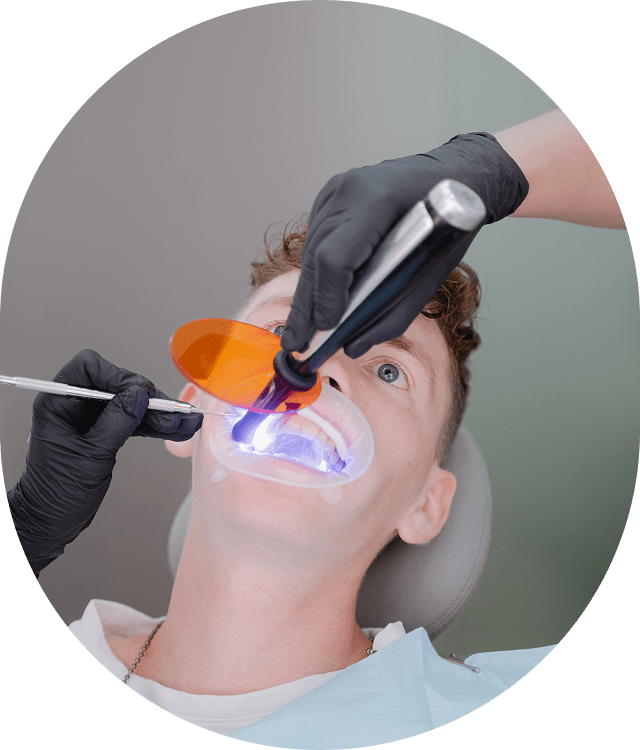
A tooth-coloured resin is applied and shaped to fit naturally with your teeth. - Hardening with a curing light
A curing light is used to harden the resin.
Final shaping and polishing
The bonded area is contoured and polished to resemble surrounding teeth, noting that results vary
How long does tooth bonding usually last?
Tooth bonding may last several years, depending on factors such as oral hygiene, lifestyle habits, and the location of the bonded tooth. Your dentist will discuss expected longevity based on your situation.
- Location of the bonded tooth: Bonding on front teeth may wear faster because they’re used more frequently.
- Biting and chewing habits: Chewing on pens, biting nails, or opening packaging with your teeth can damage bonding.
- Oral hygiene routine: Brushing and flossing daily helps maintain the strength and appearance of the bonded area.
- Diet and exposure to staining substances: The staining foods and tobacco can discolour bonds over time due to their porous surfaces.
Regular dental checkups: Routine visits help your dentist spot early signs of wear and address issues promptly.
Can bonding address chipped or uneven front teeth?
Yes, dental bonding for chips and gaps may suit chipped, uneven, or slightly worn front teeth. Tooth-coloured resin is shaped and polished to blend, preserving most natural tooth structures with this minimally invasive procedure.
Here’s how tooth bonding may help you:
- In suitable cases, bonding may be used to reshape a chipped or cracked tooth to improve its appearance. Results vary between individuals.
- Dentists may use bonding to smooth uneven or worn edges, which can help refine tooth shape.
- The resin is selected to be close in shade to your natural teeth, aiming for a discreet appearance.
- In some cases, bonding may help refine the appearance of minor asymmetries in tooth shape or size.
In suitable cases, tooth bonding may require minimal or no enamel reduction, helping to preserve more of the natural tooth.
How much does tooth bonding cost?
The cost of cosmetic tooth bonding in Joondalup varies depending on the teeth involved and the number of surfaces requiring the procedure. At Crown Holistic Dental:
- Bonding for fractured or cracked front teeth starts at $465 per tooth surface.
- Bonding for fractured or cracked back teeth starts at $260 per tooth surface.
Fees depend on factors such as the size of the fracture, number of surfaces, and any additional procedure. Your dentist will provide an itemised quotation. If bonding is for functional reasons, private health funds may contribute to the cost. We recommend contacting your health fund directly to check your level of cover and eligibility for rebates
Does tooth bonding require local anaesthetic?
Bonding usually involves minimal enamel preparation and, in many cases, does not require local anaesthetic. Your dentist may recommend anaesthesia if the procedure involves a sensitive or damaged area. The decision depends on your individual needs and will be discussed before the procedure.
- Your dentist may use an anaesthetic if the bonding procedure involves a sensitive or damaged area.
- If there’s potential for discomfort, your dentist may discuss the use of anaesthetic as part of your personalised care plan.
The decision to use an anaesthetic depends on your individual needs and how your tooth responds to the procedure.
Does tooth bonding look natural?
Tooth bonding is intended to blend with your teeth using a resin shade chosen to resemble surrounding teeth. The material is shaped and polished to help it integrate with the tooth surface, though results vary. Your dentist will explain how it is likely to appear in your case.
- Your dentist selects a resin shade that closely matches the colour of your existing teeth.
- The material is carefully shaped to suit your tooth contours.
- Like enamel, the bonding reflects light better with a polished finish.
- The resin can be layered and sculpted in detail, allowing your dentist to mimic natural tooth textures and contours.
What are the most common reasons to consider tooth bonding?
Cosmetic tooth bonding in Joondalup may be considered as a holistic approach to minor dental flaws, adjusting the shape, colour, and surface of teeth. Suitability is always confirmed after a dental assessment. For example, bonding may be considered when:
- A tooth has a small chip or crack.
- Discolouration has not responded to whitening.
- There are small gaps between teeth.
- Edges appear slightly worn or uneven.
- Gum recession has exposed a root surface that your dentist considers appropriate to cover.
What are the drawbacks or limitations of tooth bonding?
Tooth bonding may be suitable for minor cosmetic changes, but it has limitations to consider:
- Bonding is less durable than options like crowns, especially for larger restorations.
- The resin material may stain over time from coffee, tea, wine, or smoking.
- Chewing on tough items or grinding teeth may cause the bonded area to chip or wear.
- Bonding is generally suitable for minor cosmetic concerns and is not typically used for major structural restoration.
- Bonding may need to be repaired or replaced over time.
Can bonded teeth break or stain easily?
Bonded teeth can be part of a holistic approach to minor dental flaws, making them also suitable for normal everday function. However, the resin is not as durable or stain-resistant as natural enamel. With appropriate care and maintenance, bonding can last for a number of years, though durability varies depending on certain factors.
- Chewing on ice, firm lollies, or pens may cause chips or cracks.
- Habitual grinding or clenching can gradually wear the material.
- Using teeth to open packages or bite nails increases the risk of breakage.
- Resin is more porous than enamel, so drinks like coffee, tea, and wine may stain it over time.
- Whitening procedures are less effective on resin, so polishing or replacement may be advised if discolouration occurs.
Is bonding reversible, or can it be touched up over time?
While tooth bonding is considered a conservative treatment, it may involve slight alteration of the tooth surface, which is not reversible. However, the bonding material itself can often be adjusted or replaced if needed.
Bonding generally involves minimal enamel preparation, so in many cases, the underlying tooth remains largely intact. If the resin chips, stains, or wears, your dentist may polish the surface or apply additional material. During routine dental visits, your dentist will assess the condition of the bonding and advise whether a touch-up or full replacement is appropriate.
How many teeth can be bonded in one session?
The number of teeth bonded in one visit depends on your needs, comfort, and the complexity of the procedure. Bonding of one or two teeth can often be completed in a single appointment, while more detailed or multiple-tooth procedures may take longer or be scheduled across several visits. Your dentist will outline the most suitable care plan for you.
- If one or two teeth require bonding, your dentist can usually complete the procedure in a single visit. These simpler cases usually take between 30 and 60 minutes to complete.
- If you need bonding on multiple teeth, your procedure may be scheduled across several appointments. More detailed work requires additional time to shape and polish each tooth properly.
- Larger teeth or back teeth (molars) may take longer to bond than front teeth. These areas often require more precision and a slightly longer procedure time.
- Your comfort during the procedure can influence how long each session lasts. If needed, longer visits can be split into shorter, more manageable appointments.
Your dentist will plan the procedure around your schedule and desired outcome. A tailored approach helps maintain the process’s comfort and produces natural-looking results.
What is the difference between bonding and a tooth-coloured filling?
Although both procedures use tooth-coloured composite resin, they are used for different purposes.
Feature | Tooth Bonding | Tooth-Coloured Filling |
Main Purpose | May be considered for managing the appearance of chipped, uneven, or stained teeth | Restore teeth affected by decay or minor fractures |
Common Location | Primarily used on front teeth for cosmetic purposes | Commonly placed on back teeth, but suitable for any decayed area |
Tooth Preparation | Usually involves minimal enamel preparation | Requires removal of decay before placement |
Material Used | Tooth-coloured composite resin | Tooth-coloured composite resin |
Function | May adjust tooth shape, size, or colour for cosmetic purposes | Aims to restore tooth strength and support natural tooth structure, depending on the extent of the decay and restoration |
Procedure Time | Often completed in a single visit for 1–2 teeth, depending on complexity | Completed in one visit; time varies by extent of decay |
Health Fund Plan | May not be covered if performed purely for cosmetic reasons | May be claimable if used to restore tooth decay |
Fund My Dental