
Explore All-on-X Dental Implant Options With Our Joondalup Team
Considering a long-term option for replacing missing teeth? All-on-X dental implants can provide full-arch support using a simplified implant structure tailored to your individual needs.
The Concept Behind the
All-on-X Technique
Losing multiple teeth can significantly impact your ability to eat, speak, and interact with others. For some, traditional dentures may feel unstable or difficult to manage over time.
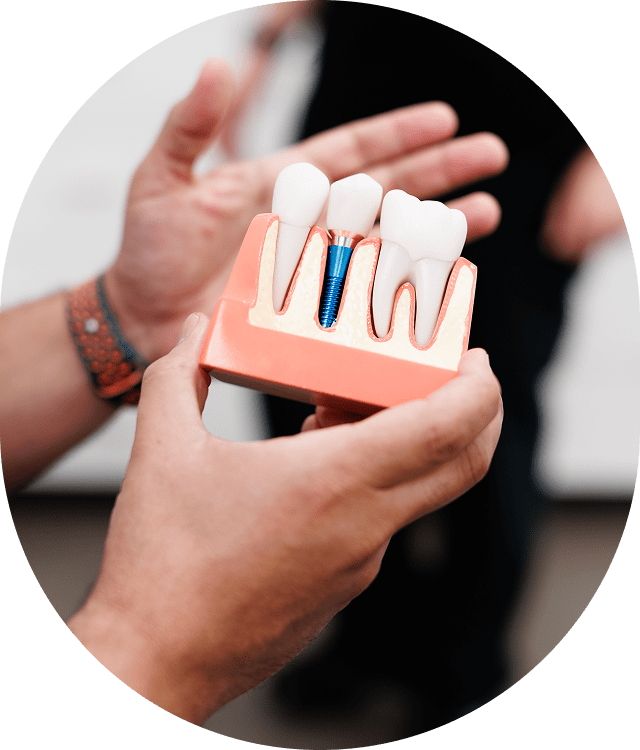
The All-on-X concept offers an alternative by using four or more implants placed at calculated angles. Through angled implant placement, this approach supports a fixed dental bridge across the full arch, depending on suitability determined at consultation.
Why Patients Choose Crown Holistic Dental for
Dental Implants
Implants Designed for Oral Function
Dental implants are commonly used to replace missing teeth and help restore chewing and speaking ability. Using materials recognised for clinical use, our planning focuses on practical considerations within a patient’s overall care. Results vary between patients.
Personalised Treatment Planning
We begin with a comprehensive consultation and clinical assessment. Plans are tailored to each patient’s needs, and alternatives are explained to support informed decision-making. Our approach is to outline expected treatment steps, considerations, and follow-up so patients understand the process and what is required for ongoing care.
Care With Patient Support in Mind
Treatment is planned and carried out with consideration for surrounding oral structures. We explain each stage, provide information about recovery, and outline possible risks. Patients are supported with guidance designed to help them prepare and manage their treatment responsibly.
Ongoing Support for Long-Term Care
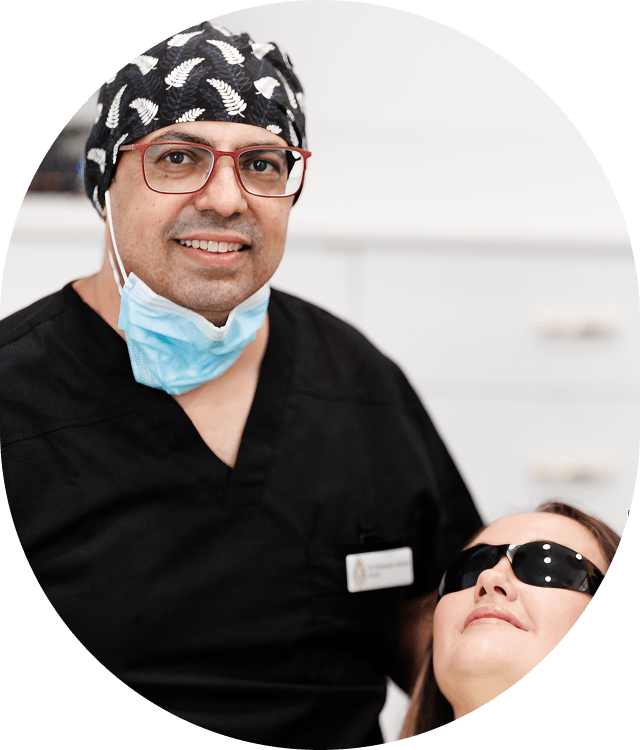
Dental implants require ongoing maintenance and follow-up. We provide advice on hygiene, regular check-ups, and long-term care. Professional reviews are important to assess implant condition over time, and our team offers continued guidance as part of overall dental care.
Who Is a Candidate for All-on-X
Dental Implants?
- All-on-X dental implants may be a suitable option for individuals seeking a fixed alternative to traditional dentures. You may be a candidate if you:
- Have lost most or all of your teeth in one or both arches
- Are looking for a fixed, non-removable tooth replacement
- Have sufficient bone density or are eligible for grafting
- Are in good general and oral health to undergo implant placement
Benefits of All-on-X for Full Smile Restoration
- All-on-X is one option for full-arch tooth replacement that may be appropriate in certain situations. Depending on individual assessment, this approach may:
- Maecenas fermentum mi id mattis congue. Maecenas tristique fermentum urna, mattis vestibulum justo dictum vel. Nunc malesuada ligula id eros maximus gravida.
- Maecenas placerat efficitur mauris sed condimentum.
- uspendisse aliquet, mi hendrerit volutpat lacinia, risus augue dapibus dolor, quis sodales diam erat non lacus.
- Suspendisse efficitur sed diam at dapibus. Nullam molestie consectetur pellentesque. Mauris dignissim massa ut purus tempor placerat.
- The benefits listed are not guaranteed for every individual. Suitability, potential risks, and limitations must be assessed through a comprehensive consultation.
Ready to Begin Your
All-on-X Journey?
Exploring All-on-X dental implants starts with a conversation. A dental consultation offers the opportunity to learn more about your options, ask questions, and receive personalised guidance tailored to your situation and oral health needs.
A Look Into the All-on-X Process and Phases
Initial Consultation and Assessment:
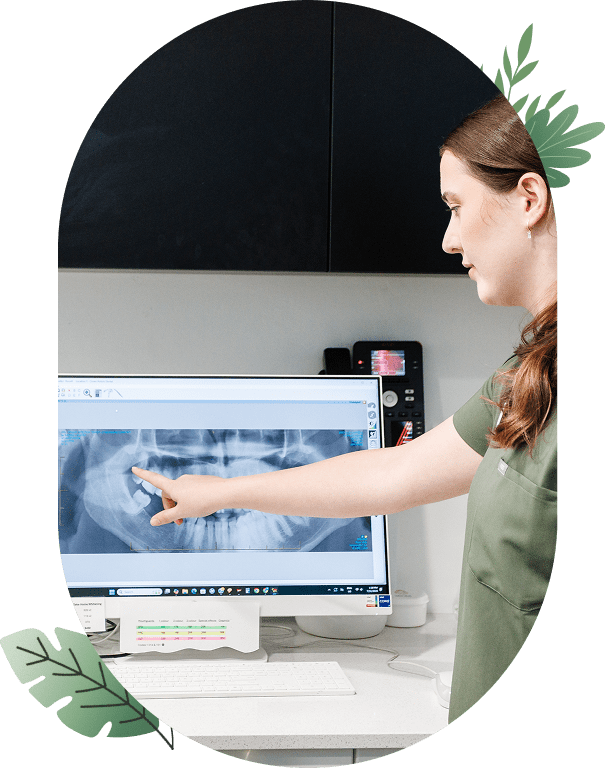
The journey begins with a detailed consultation, during which your oral and general health are thoroughly reviewed. Diagnostic tools, such as 3D scans or X-rays, may be used to evaluate bone levels and determine whether All-on-X is appropriate for your situation.
Treatment Planning and Digital Design:
Once you're assessed as a candidate, your dental team will create a personalised plan. This includes the number and positioning of implants, as well as digital planning for the shape, size, and positioning of the prosthetic teeth.
Implant Placement Procedure:
During this phase, four or more implants are placed into the jawbone, often at varied angles to maximise contact with available bone. Temporary teeth may be attached on the same day, depending on your individual treatment plan and healing considerations discussed during the planning stage.
Healing and Final Prosthetic Attachment:
The implants are left to integrate with the bone over a few months. Once healed, the temporary bridge is replaced with your final set of teeth—customised to support oral function and appearance, based on your individual treatment plan.

Frequently Asked Questions
What does the term 'All-on-X' mean?
“All-on-X” describes full arch implant support, where an entire upper or lower row of prosthetic teeth is anchored using a tailored number of dental implants. The “X” simply represents a variable—typically four, six, or more implants—depending on what’s most appropriate for your jawbone density and treatment goals. This method is designed to support a fixed, implant-retained bridge, offering an alternative to removable dentures.
Unlike traditional implants, the All-on-X concept focuses on anchoring an entire arch of teeth to a few strategically placed implants. These are usually tilted at specific angles to maximise bone contact and stability. This design can reduce the need for bone grafting in some cases and streamline the overall procedure. The exact number of implants is tailored during the planning stage based on your individual oral health needs.
How does All-on-X differ from All-on-4?
Although often used interchangeably, All-on-4 vs All-on-X represents two variations of the same full-arch treatment concept with important distinctions in planning. Both are designed to replace all teeth in one arch using dental implants. The difference lies in the number of implants used and the flexibility of the treatment planning.
All-on-4 | All-on-X |
Fixed: number of implants is always 4 | Flexible: number of implants is typically 4, 6, or more |
Follows a standardised protocol | Approach adapted to individual needs and anatomy |
Less adjustable once planned (set structure) | Offers customisation during planning |
Often suited for moderate bone loss | Broader use, including complex cases |
While All-on-4 may suit some straightforward cases, All-on-X provides more adaptability—particularly when comparing options like implant bridge vs All-on-X for full-arch treatment planning. Your dental team may recommend different options based on your clinical assessment.
How many implants are typically used in All-on-X?
The term “All-on-X” reflects a flexible approach, where the number of dental implants can be adjusted to meet individual needs. In many cases, four implants are placed per arch (as seen in the All-on-4), but some patients may benefit from five, six, or even more. This decision is influenced by factors such as jawbone density, the shape of the arch, and the amount of support required for the prosthetic bridge.
The goal is to achieve a stable and balanced foundation for the replacement teeth while working with the available bone structure. Additional implants may be recommended in areas with softer bone or when more load distribution is needed. Your dental provider will assess your situation using 3D imaging and a comprehensive clinical examination to tailor a plan based on your oral health and anatomy. This flexibility often becomes a consideration in All-on-4 vs All-on-X planning, especially when adapting to bone density or arch shape.
Can All-on-X work for patients with low bone density?
All-on-X may be an option for some people with reduced bone density, depending on their individual situation. In certain cases, angled implant placement can be planned to work with the available bone, though this approach is not appropriate for everyone.
When bone density is significantly reduced, additional procedures such as grafting or placing extra implants may be recommended to provide adequate support. A detailed clinical assessment, including scans and examination, is required to determine whether All-on-X is suitable or if alternative treatments may be more appropriate.
What materials are used in the All-on-X restoration?
The All-on-X restoration consists of two main components: the implants placed in the jaw and the prosthetic bridge attached to them. At Crown Holistic Dental, materials commonly used in implant dentistry are selected for their strength, compatibility, and established use in supporting oral restorations.
- Titanium implants:
The implants are made from medical-grade titanium. This material is widely used in implant dentistry due to its strength, compatibility with the body, and proven ability to bond with bone over time. - Ceramic prosthetic bridge:
The teeth in the bridge are made from ceramic, a strong and durable material. Ceramic is chosen for its resistance to wear and staining, as well as its ability to reflect light, closely resembling tooth enamel.
These materials are selected not only for their clinical performance but also for their ability to support both function and aesthetics. Your dental team will guide you through these options to help align with your preferences and oral health needs.
How long does the full All-on-X process take?
The overall timeline for All-on-X dental implants can vary depending on individual circumstances, but the process typically follows a series of phases over several months.
- Consultation and assessment:
This stage includes diagnostic imaging, clinical evaluation, and treatment planning. It is usually completed within one or two appointments. - Preparatory procedures (if necessary):
In some cases, additional steps such as extractions or bone grafting may be required prior to implant placement. These procedures can extend the overall timeline. - Implant placement and temporary bridge:
The implants are placed in a single appointment. A temporary bridge may be fitted shortly after, depending on the treatment plan. - Healing period (osseointegration):
The implants are given time to stabilise and bond with the bone, which typically takes between three and six months. - Final prosthetic placement:
Your dental provider will attach the final bridge once healing is complete, and adjustments will be made accordingly to support comfort and function.
The entire process generally takes between 4 and 9 months, depending on healing time and any additional procedures required.
How do I care for my All-on-X restoration at home?
Daily care helps keep your All-on-X restoration clean and supports the health of your gums and surrounding tissues. Although the bridge is fixed in place, it still requires regular maintenance.
Here are some helpful at-home care tips:
Use a soft-bristled toothbrush and a non-abrasive toothpaste to clean around the prosthesis and gumline gently. An electric toothbrush may also be suitable if recommended by your dental provider.
Interdental brushes, soft picks, or a water flosser can help clean beneath the bridge, where traditional floss may not reach effectively.
A gentle, alcohol-free mouthwash may be suggested to help support gum health and reduce buildup.
- In addition to at-home care, regular professional cleanings and examinations allow your dentist to monitor the restoration and surrounding tissues over time.
Consistent oral hygiene and routine dental visits can help support the comfort, function, and appearance of your All-on-X restoration.
Is All-on-X a fixed or removable option?
All-on-X is a fixed option. The prosthetic arch is attached to dental implants placed in the jaw, and it remains in place during daily activities like eating and speaking. It is not removed at home and is designed to function much like your teeth.
Although fixed, the bridge can be taken out by a dental professional when needed—for cleaning, maintenance, or adjustments. This approach is often chosen by individuals who prefer an alternative to removable dentures that stays in place throughout the day.
Are there risks or side effects with All-on-X implants?
All-on-X dental implants are commonly performed; however, like any surgical procedure, they carry risks and side effects. These effects vary between individuals and may occur during the early stages of healing.
Some risks and side effects may include the following:
Swelling or bruising may develop around the surgical area shortly after the procedure.
Temporary discomfort or sensitivity is common during the early stages of healing.
Minor bleeding may occur soon after implant placement and typically settles quickly.
Infection is a possibility if the area is not cleaned properly or if aftercare instructions are not followed.
Delayed healing may be seen in individuals with certain health conditions or habits, such as smoking.
- Implant failure can occur in some cases if the implant does not bond effectively with the bone.
Your dental team will explain these risks and provide care instructions to help support your recovery.
Are there risks or side effects with All-on-X implants?
All-on-X dental implants are commonly performed; however, like any surgical procedure, they carry risks and side effects. These effects vary between individuals and may occur during the early stages of healing.
Some risks and side effects may include the following:
Swelling or bruising may develop around the surgical area shortly after the procedure.
Temporary discomfort or sensitivity is common during the early stages of healing.
Minor bleeding may occur soon after implant placement and typically settles quickly.
Infection is a possibility if the area is not cleaned properly or if aftercare instructions are not followed.
Delayed healing may be seen in individuals with certain health conditions or habits, such as smoking.
- Implant failure can occur in some cases if the implant does not bond effectively with the bone.
Your dental team will explain these risks and provide care instructions to help support your recovery.
What can I eat after receiving All-on-X?
Following the procedure, a soft-food diet is usually recommended to support healing and minimise pressure on the implant sites. This phase typically lasts for several weeks, depending on your treatment plan and recovery progress.
Examples of suitable foods include the following:
Blended soups and broths, served at a comfortable temperature, are smooth in texture.
Mashed vegetables such as pumpkin, sweet potato, or avocado require minimal chewing.
Soft fruits, such as bananas or stewed apples, can be eaten without needing to bite or tear.
- Oats, yoghurt, and scrambled eggs are easy to eat and gentle on the healing area.
Your dental provider will let you know when it’s appropriate to begin reintroducing firmer foods based on your individual recovery.
Does All-on-X require general or local anaesthesia?
All-on-X procedures are commonly performed under local anaesthesia. This numbs the area where the implants are placed, allowing you to remain awake and comfortable during the procedure. Local anaesthesia is often suitable for appointments carried out in a dental setting.
In some cases, sedation or general anaesthesia may be offered, especially for individuals with dental anxiety or more involved clinical needs. Your dental provider will discuss the available options and recommend the most appropriate approach based on your medical history, preferences, and treatment plan.
When might a dentist recommend All-on-X over other options?
All-on-X may be considered in situations where a full-arch replacement is required, and other treatment options are less suitable. The decision depends on several clinical and personal factors that are assessed during consultation.
A dentist may recommend All-on-X when:
There is sufficient jawbone volume and density in areas to support implant placement without the need for additional procedures.
Most or all teeth in the arch are missing or require removal due to damage or disease.
The person demonstrates the ability to maintain oral hygiene around a fixed implant-supported prosthesis.
Medical history and current medications indicate that implant placement is suitable and healing is likely to proceed as expected.
The individual has previously worn removable dentures and is exploring fixed alternatives.
- Bite alignment and jaw structure allow for a full-arch restoration using a limited number of implants.
A thorough assessment will determine whether All-on-X is the preferred option—particularly when comparing implant bridge vs All-on-X for full-arch care.
Fund My Dental